
During COVID, public health officials were ‘canaries in a backlash coal mine.’ Today they’re out of the mine but still taking heat
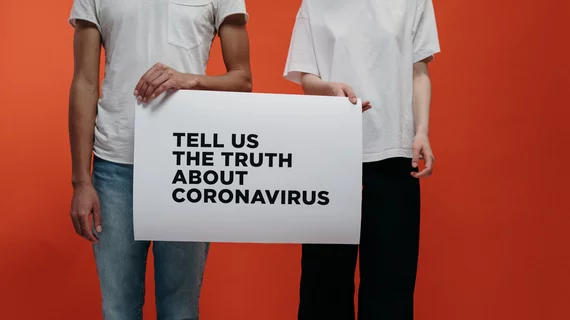
The COVID-19 public health crisis ended in May 2023, three and a half years after HHS declared the pandemic a national health emergency. However, public anger over U.S. healthcare’s response is still rearing its ugly head in 2026.
And public health officials—PHOs—continue to bear the brunt.
That’s according to an analytical essay published in the American Journal of Public Health.
Recently interviewing 109 PHOs who led state and local health departments during the COVID-19 pandemic, Marian Moser Jones, PhD, MPH, of Ohio State University and colleagues found:
- 76% had experienced ‘extraordinary backlash.’ Jones and co-researchers define this as the use of overt coercion to thwart public health action through fear or brute force, physical or political. Respondents’ examples included receiving death threats, getting spit upon, enduring vulgar insults and the like.
- 47% had experienced ‘undermining backlash’—the use of subtle coercion to hinder public health action or damage PHO credibility. “This included overwhelming PHOs with data requests, repeated guideline revision demands, public disparagement of PHO credentials and law enforcement’s refusal to enforce orders,” the authors explain.
- 81% of women reported having experienced extraordinary backlash, compared with 68% of men.
Among the observations Jones and co-authors offer are these five.
1. Backlash politics have now spread to all levels of public health, from the hyperlocal to the federal.
‘The ongoing, eviscerating federal backlash against public health—devastating cuts to programs and services and crippling reductions in force, politicized defunding of vaccine and other critical research, replacement of experts with partisans, active promotion and legal encoding of mis- and disinformation, and the decentering of justice and equity in the judicial system—impacts every level of governmental public health, none of which operates independent of the CDC.’
2. While public health measures must be grounded in science and evidence, evolving science creates conditions of uncertainty.
‘Public health decision-making always involves a political calculus, and crises increase the political risks when weighing tradeoffs and competing priorities. This makes cross-sectoral collaboration imperative. It is thus deeply troubling that, across many states, PHOs told us how political figures initiated or amplified backlash against them.’
3. Even in serious-to-extreme backlash climates, PHOs who kept their positions through the pandemic described productive, civil relationships with elected officials despite profound disagreements.
‘Decision-making by teams whose members listened to one another and talked through disagreements to settle on a position helped to reduce personalization of authority and diffuse backlash toward any individual or institution. This collective model for emergency decision-making, in which listening and being heard is central, could be effective in both highly polarized and politically homogenous contexts.’
4. Legal protection is needed.
‘Where boards of health exist, legislation can reform the relationship between local elected officials and public health by changing the composition of those boards. Such legislation was passed in Washington State in 2021, which now requires that local boards of health—other than those in home rule localities—include unelected members with scientific expertise.’
5. As alarming as the pandemic backlash experience was, PHOs were ‘canaries in a backlash coal mine.’
‘Pandemic backlash has now metastasized into an era of full-blown political backlash undermining the nation’s health at every turn. Effectively preventing acts of backlash and securing public health authority is imperative, but countering backlash politics requires collective action that defends public health as a field while broadly rejecting fear, violence and a politics of division.’
The paper is posted in full for free (click PDF/ePUB).

Dave P. has worked in journalism, marketing and public relations for more than 30 years, frequently concentrating on hospitals, healthcare technology and Catholic communications. He has also specialized in fundraising communications, ghostwriting for CEOs of local, national and global charities, nonprofits and foundations.