
‘Black matter’ in ICU Medical IV drips deemed unlikely to pose a risk to patients

The U.S. Food and Drug Administration (FDA) and ICU Medical have updated an early alert from May pertaining to “black matter” in IV lines and drip chambers, at the time believed to signal a possible contamination. Now, it seems as if the issue may be nothing more than a benign manufacturing anomaly.
According to a correction issued by the FDA, an investigation conducted by ICU Medical, the device manufacturer, “has determined that the reported discoloration is intrinsic to the PVC used to manufacture the drip chamber and remains embedded within the drip chamber wall.”
In other words, it’s part of the plastic being used.
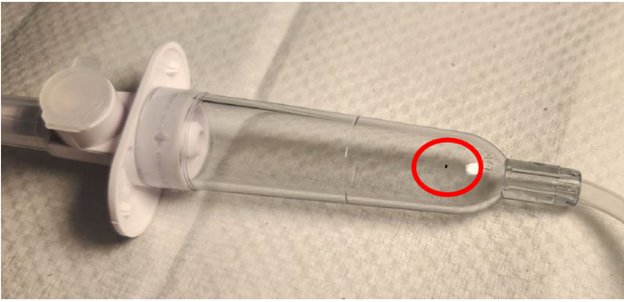
To support the finding that this is nearly conclusive, the medical device company evaluated returned samples from customers and put them through a “laboratory analysis, simulated-use testing, and inspection of product inventory,” after which it concluded that the IV products are likely safe to use.
The FDA added that there was no indication the mysterious black spots were biological contaminants or foreign material of any kind, and there was no evidence they disrupted the flow of fluids or posed any danger to patients.
“Based on this investigation, the observed discoloration is characteristic of the drip chamber material, does not enter the fluid path, and does not affect device safety, performance, or intended use,” the agency wrote.
Given the results of the investigation, neither the FDA nor ICU Medical believes there is any reason to conduct enhanced inspections of the IV tubing sets. The devices are free to be used as intended, based on protocols established by hospitals and provider groups.
FDA calls for discretion
While no risk to patients has been identified, the FDA said in its update that it has determined there may be a risk to health, if the black material were to become dislodged. It did not call for any products to be returned, instead advising providers to weigh the pros and cons of opting for a replacement should black spots be discovered.
If any material is found to be loose, it should not be used. However, if it seems like the discoloration is simply part of the PVC manufacturing as ICU Medical maintains, the FDA warns that delaying patient therapy to get a new IV drip line may result in “clinically significant” risks, “especially for time-sensitive, life-saving infusions or when a replacement cannot be readily obtained.”
To date, no serious injuries have been reported associated with the issue.
For more, read the full FDA alert by clicking here.

Chad is an award-winning writer and editor with over 15 years of experience working in media. He has a decade-long professional background in healthcare, working as a writer and in public relations.