
Google, NASA working to deploy AI medical assistant on space missions
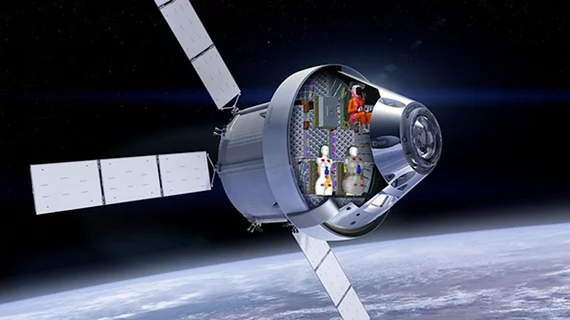
Google and NASA said they are working together to bring remote care to astronauts during space missions, in a trial run of technology that could be used for extended trips to the moon and Mars.
According to a blog posted by Google, NASA is exploring ways that “remote care capabilities can deliver detailed diagnoses and treatment options if a physician is not onboard” or during space travel where communication with Earth is limited. The inspiration for the idea came as NASA prepares its Artemis mission, a plan for humans to return to the moon.
At the center of the project is the Crew Medical Officer Digital Assistant—a system that assess injuries and illnesses, and advise on treatment based on astronauts’ symptoms. The tool is backed by Google AI trained on spaceflight literature, and it’s designed to support a medical office or crew surgeon as they work to keep a flight crew healthy.
Google said the system is being tested with simulated scenarios and evaluated using a clinical framework designed to assess the performance of medical students. While it’s too early for anyone to declare the system ready for a trip to Mars, Google and NASA have found its performance to be promising.
“Early results showed promise for reliable diagnoses based on reported symptoms,” the blog reads. “Google and NASA are now collaborating with medical doctors to test and refine the model, aiming to enhance autonomous crew health and performance during future space exploration missions.”
The AI tool uses “cutting-edge” natural language processing as the backbone for its clinical assessments. Google and NASA said they hope to expand the types of medical scenarios the model can help with over time, in an effort to create something that can operate autonomously in the sealed environment of a space vehicle.
Remote care on the homeworld
Google said the use of such a tool could extend beyond space to other “remote and demanding environments” on our own planet.
“This tool represents an important milestone for AI-assisted medical care and our continued exploration of the cosmos,” the company added. “It holds potential for advancing space missions and could also benefit people here on Earth by providing early access to quality medical care in remote areas.”
More details on the AI could be revealed during the Google Public Sector Summit taking place Oct. 29 in Washington, D.C.
For more, read the full blog from Google by clicking here.

Chad is an award-winning writer and editor with over 15 years of experience working in media. He has a decade-long professional background in healthcare, working as a writer and in public relations.