
Q&A: Virtual health system places bet on primary care as the future of telemedicine

With people all over the world stuck indoors during the COVID-19 pandemic, in-person patient care faced a massive slowdown. At the same time, regulators and the general public began changing their tune on what telemedicine was capable of—with remote patient care proving it was no longer limited to follow-ups and sick visits.
Building on the trend, in 2021 HealthTap, a telemedicine provider, began to change its focus, moving from urgent care to an expanded model that would allow patients to develop long-term relationships with their doctors through the use of technology.
Today the company embraces the label of a "virtual health system," one that specializes in providing primary care to patients all over the country.
HealthExec spoke with HealthTap’s co-founder and CEO, Sean Mehra, to discuss the realities of virtual primary care delivery, its benefits and limitations—and what televisits will look like in the near future.
Editor's note: The following interview has been edited for clarity and concision.
HealthExec: Can you tell me a little bit about HealthTap and what it means to provide primary care to patients via telehealth?
Mehra: We're in the business of delivering true primary care. The industry buzzwords would be longitudinal, relationship-based primary care, but really what that means simply is you get to choose and then keep one doctor—hopefully for the rest of your life—whom you love.
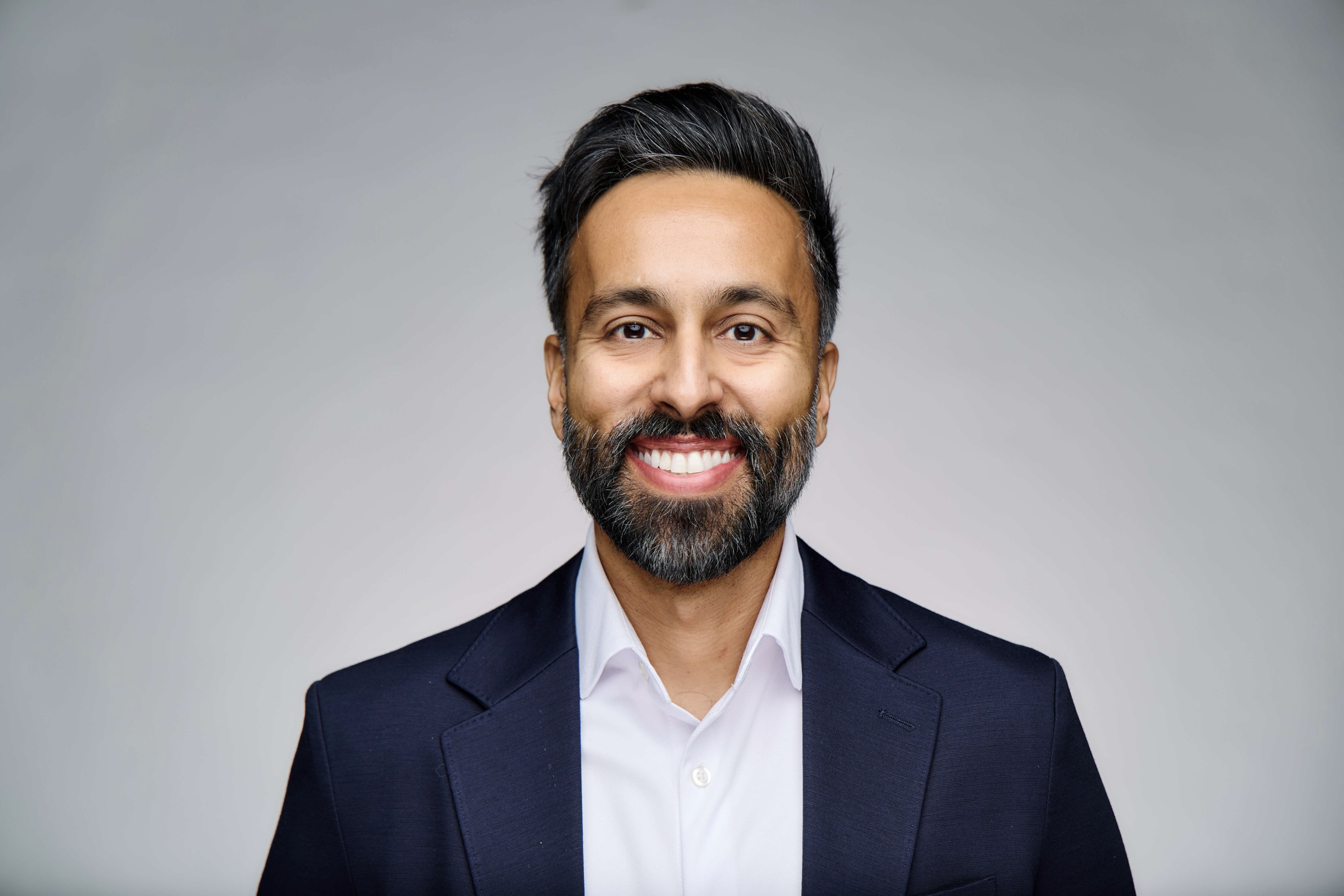
If you think about what actually matters most in healthcare, it's catching diseases early and managing chronic conditions before they get bad. All of that happens in a primary care setting and through that patient-doctor relationship. So that's what we do, and we do it virtually across all 50 states.
HealthTap is addressing access issues, because there aren't enough doctors: Wait times suck, and a lot of Americans don't even live near a doctor's office. Our belief is that by taking our precious, limited supply of board-certified human primary care physicians (PCPs) around this country and making them accessible remotely—through a video relationship—they can touch more people when they need it, more efficiently than if we were just brick-and-mortar.
When most people think of televisits, they assume this is an urgent care or sick patient kind of situation—how do you get consumers to accept that model for primary care?
Urgent care was a natural place for the industry to start when it came to figuring out the types of care that can be delivered through telehealth. I think all that stigma around whether you can actually deliver primary care online has gone away, and the pandemic really helped with that.
We've seen that half of our new patients didn't even have a primary care doctor before joining us, which shows people are ready for this model. So, basically 90% of stuff—other than jabbing you with a vaccine —we can do virtually.
Still, a lot of care requires an in-person visit or something hands-on. What happens when I need lab work or a physical exam?
Referrals to local or specialist providers happen for that kind of stuff, it’s unavoidable for 5-10% of virtual visits.
But that isn’t really what most primary care is. It’s for monitoring your overall health and underlying conditions—diabetes, being overweight, cholesterol issues, blood pressure issues, anxiety or sleep struggles. All of these are very well managed online.
We successfully close nearly 60% of preventative care gaps for our patients entirely through our virtual model.
If you need medication, a doctor can e-prescribe it. You want to get blood work so we can figure out what's going on? A doctor can submit an order and you go to any lab to have that done.
In terms of sending someone to a specialist, primary care providers help navigate that, and through telehealth that’s no different. They’re the quarterback. They make the calls and they review everything that’s going on.
Is this something where you find that rural areas use it more often?
It’s all walks of life, honestly. But rural areas have a very stark need because there’s just not a doctor around when a patient needs one. But even in dense urban population centers, average wait times exceed four to five weeks in most places these days. So the access friction exists regardless of where you live in this country.
What about reimbursement: Will Medicare cover primary care delivered via telemedicine? Do private insurers also welcome this virtual shift?
The answer is pretty much yes. That’s the other interesting thing about HealthTap specifically. We said, look—if our mission is to place a primary care doctor at every American’s fingertips, it should work no matter where they live or how they pay for care.
A lot of people who use us are going to be older or lower-income, we are plugged into Medicare and Medicaid—we’re not just focusing on employer-sponsored health plans, which tend to be younger, healthier working-age people.
Let’s talk about data. Health systems are always looking for ways to gather information on patients to improve operations, care delivery—you name it. With a virtual health system, I imagine you’re capturing data all the time. How are you using it? How is it impacting the service and patient care?
I’m happy to take the label of a health system—call us a virtual health system focused on primary care. In fact, we are the first virtual primary care practice to earn Joint Commission Gold Seal accreditation, which is the gold standard for health systems.
If you compare us to traditional health systems, one big difference is that we have our own proprietary technology—we use a custom EMR, built to support this virtual ecosystem. So, the data we get on physician and patient usage—funnels, drop-off points, pain points—we can directly monitor and observe because it’s our code and our telemetry.
What about artificial intelligence? Every app that is consumer facing uses it, what kind of uses does it have for virtual visits?
We were early in using AI for patient interviews. We have a product called Dr. A.I.—it’s a trademark we registered well before this became popular, launching back in 2017.
Originally, it was a symptom checker, like everyone had. But we realized nobody really wants that—just like nobody wants to go through a phone tree to talk to customer support. They just want to talk to a doctor.
So we said: one of the most useful and safe ways to use AI is to ask patients all the relevant questions a doctor would ask at the start of a visit, summarize it, and put it in the note. Because we operate a licensed medical practice, our AI is always supervised by a human doctor who provides the empathy, judgment and legal authority to treat.
The next frontier is: How do we augment what the physician does to make care both higher quality and more efficient, more productive? And we’re in that phase. Dr. AI is becoming a physician copilot—for both decision-making and documentation.
I’m curious about your EMR. Do you feel this gives you more control over data sets, and provides the AI with cleaner information to draw from?
By building and controlling our EMR, we control not just the data pipes in the back end, but the front-end workflow. That level of control lets us make the user experience more efficient and effective. It's a system co-designed with our own doctors, which is why our physician satisfaction scores are incredibly high compared to the burnout you see with legacy EMRs.
For example, we can put Dr. A.I. and your PCP in the same group chat. When you text your doctor, the AI is there too, helping both the patient and the doctor in real time. The custom EMR makes that possible, because we know exactly where data to facilitate that chat is being drawn from.
How well do you share data with other systems?
We participate in QHINs, so the idea is that whatever we learn about our patients, we write back. Other doctors caring for that patient can benefit from the same data.
That’s key to being a good citizen in the healthcare ecosystem. The data should be owned by the patient, in the cloud, and if you have permission to treat them, you should be able to read and write that data bidirectionally.
That’s what true interoperability looks like, and it's why major health systems and enterprise partners trust us to integrate seamlessly with their existing infrastructure.
Chad is an award-winning writer and editor with over 15 years of experience working in media. He has a decade-long professional background in healthcare, working as a writer and in public relations.