
CMS leaves the ’80s behind with shift away from snail mail correspondence, fax machines
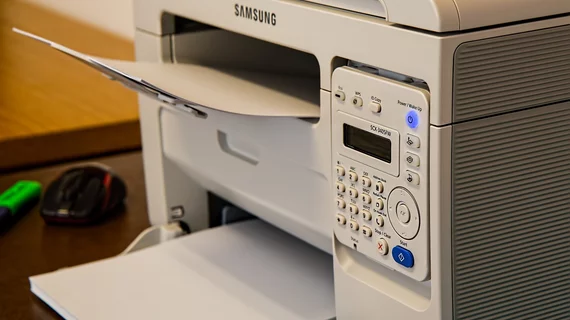
Fax machines and pen-and-paper correspondence will soon be a thing of the past at the Centers for Medicare & Medicaid Services (CMS), the agency announced on Friday.
In a Final Rule, CMS revealed that it will be entering the digital age by phasing out old communication technology, mainly fax machines and snail mail, a move that it said will save taxpayers nearly $782 million a year—including expenses related to the manual labor necessary to manage such correspondence, as well as paper and ink necessary for such responses.
As part of the shift, the agency said it will be establishing national standards for future electronic communications, ensuring such methods are safe and secure. Notably, as the largest healthcare payer in the country, CMS relies on clinical documentation and letters from physicians to support Medicare reimbursement.
The proposal, officially titled the Administrative Simplification; Adoption of Standards for Health Care Claims Attachments Transactions and Electronic Signatures Final Rule, will go into effect May 26.
After that time, any provider, hospital, health system or medical device supplier who submit claims to Medicare will have two years to fully adopt the new CMS protocol and get on board with electronic communications.
Health plans and claims processors will also be required to join the new age of digital correspondence if their work impacts patients with traditional Medicare or Medicare Advantage. Currently, payers often exchange information with CMS via fax—though not for long, once the final rule is published to the Federal Register.
“The 1980s called, and they want their fax machines back,” CMS Administrator Mehmet Oz, MD, said in a statement. “The futuristic medical breakthroughs we’ve achieved, like augmented reality glasses that give surgeons X-ray vision, shouldn’t have to coexist with administrative systems that often lag decades behind.
“This new rule will modernize American healthcare by standardizing electronic claims attachments and enabling secure electronic signatures. Because every minute providers save on paperwork is another minute they can spend caring for patients,” he added.
The change has been a long time coming. The initial proposed rule to shift from paper to electronic communications was announced in December 2022.
Speeding up patient care delivery
In a fact sheet released to support the shift, CMS touted time savings and improved efficiency as gains associated with the shift to digital. The agency said that patients will also benefit, as exchanging medical imaging records, clinical notes and more through a slow, labor-intensive process like postal mail raises the cost of care delivery and leads to delays.
CMS also outlined the standards it will use for the secure exchange of healthcare records and data, including Health Level 7 (HL7) for integrations and X12 for attachments, all backed by e-signature verification.
The full fact sheet is available here.

Chad is an award-winning writer and editor with over 15 years of experience working in media. He has a decade-long professional background in healthcare, working as a writer and in public relations.