
Researchers arrive at detailed guidance for visitor policies, practices in the PICU
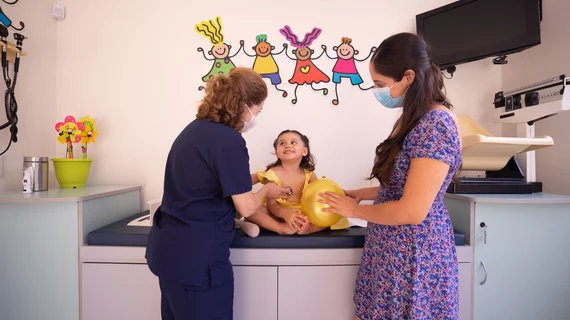
When formulating governance of and best practices for family visitation, pediatric ICU leadership should stay focused on three overarching aims: Prioritize the child’s best interest, tap the experience of people with firsthand PICU knowledge, and grant unrestricted access to the patient by at least two beloved—or at least trusted—caregivers.
That’s a distillation of a study conducted by Canadian researchers and published Nov. 12 in JAMA Network Open.
For the research, Laurie Lee, NP, PhD (candidate), and colleagues used surveys and virtual meetings involving 43 “knowledge users.” These included former PICU patients (one as young as 6 years old), family members, clinicians and policymakers—mainly hospital and PICU administrators and infection prevention and control specialists—from across Canada.
The work yielded 10 policy priorities and 44 practice recommendations.
Along with the three aims listed above, other themes emerging as essential included:
- Families should determine sibling presence and assume responsibility for it;
- Policies should recognize the importance of visitors beyond family for the patient’s well-being; and
- Policies should be flexible, adapting to different situations while adhering to core priorities.
The 44 recommendations cover such key concerns as who should make policies; communication, enforcement and change processes; number, type (eg, parents or caregivers, siblings, and visitors), and timing of bedside presence; family movement and supports; and approaches to personal protective equipment and infectious symptoms to preserve family presence, including during emergencies.
Lee and co-authors note that their research-derived guidance is specific to PICUs but “may be applied broadly to children’s hospitals with adaptation for local contexts and populations.”
It doesn’t seem a stretch to assume some of the guidance could apply to adult ICUs and other inpatient settings as well.
Further, although developed in the Canadian context for PICUs, “it is likely that [the study’s] recommendations are applicable to any setting in which there is broad application of family-centered care,” Lee and co-researchers remark in their discussion section. “[W]e believe that these recommendations can, and should, be applied more broadly to pediatric hospitals and welcome the sharing of hospital-based experiences with implementation.”
The paper is posted in full for free.
In invited commentary on the work, Mallory Perry, PhD, RN, and Elizabeth Broden Arciprete, PhD, RN, laud Lee et al.’s work for, among other things, its inclusion of children and family members as subject-matter experts.
This nonclinical, nonprofessional component “aligns with the core principles of patient-centered and family-centered care and represents an important shift from family presence to family partnership,” Perry and Broden Arciprete write. “In other words, children and families are not simply visitors to the bedside or subjects of policy but are key contributors to [policy] development.”
Full commentary here.

Dave P. has worked in journalism, marketing and public relations for more than 30 years, frequently concentrating on hospitals, healthcare technology and Catholic communications. He has also specialized in fundraising communications, ghostwriting for CEOs of local, national and global charities, nonprofits and foundations.