
Do older patients shy away from mHealth apps—or do clinicians too often assume they will?
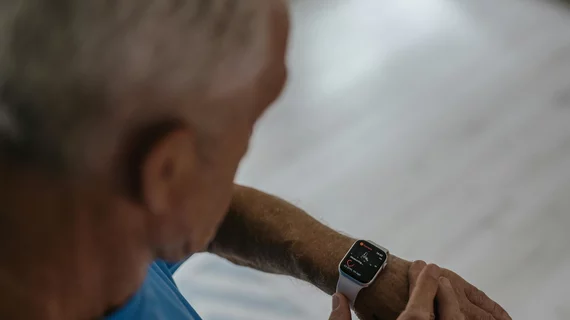
The count of mobile health apps now tops 350,000. Categories include everything from wearables for tracking physical fitness and sleep habits to chatbots for general mental wellness and chronic condition management.
What attributes separate the widely embraced from the barely used? Researchers at the University of Michigan set out to find out.
Seeking insights into mHealth preferences among medical professionals as well as healthcare consumers, Cornelius James, MD, and colleagues conducted semi-structured interviews with 20 clinicians and 28 patients.
Upon analyzing the Q&A transcripts, the researchers noted that both groups held overall positive views of digital health in general and mHealth apps in particular.
There was, however, one clear point of divergence.
“Although similar factors were considered by patients and clinicians, their views about older adults’ interest and ability to use mHealth apps differed,” the authors report. “[C]linicians’ perceptions about older patients’ interest in and ability to use mHealth apps may negatively impact recommendation of mHealth apps and subsequent adoption by older adults.”
Such perceptions aren’t always off the mark, but levels of acceptance vs. avoidance vary widely among and between individuals, the authors suggest. They cite recent prior research showing that more than 81% of older adults use digital health technologies while more than 40% use at least one mHealth apps.
The present study doesn’t focus solely on seniors. But the team’s full findings, published March 2 in JMIR mHealth and uHealth, include similarly useful observations on that demographic.
These include:
Older patients feel technologies should be designed to facilitate use by their age group.
In addition, they commonly express a willingness to learn health technologies as situations arise.
“I am the type where, if there is a need to use an app—especially for healthcare—I would learn to use the app,” a 72-year-old male patient told the researchers.
“There are some things that I can do on a computer, some things that I can do on my tablet,” offered an 86-year-old woman. “And if I learn to do something, I pretty much know it.”
Clinicians generally do not view any patients—especially older ones—as tech-savvy.
Many tend to doubt that seniors will want to—or be able to—use mHealth apps and other digital technologies.
“I have some patients where I could probably tell you right off the bat. They’re not gonna be interested, just cause they’re not into tech type things, you know,” a clinician with 10 years of experience said. “I have some patients who still wish they could have their flip phone. Usually that’s my older generation of patients, although sometimes they surprise you.”
Clinicians should take an individualized approach to recommending mHealth apps to older adults.
“When studying older adults’ use of mHealth apps, using a framework that does not include age but does include variables associated with the aging process—e.g., memory or physical limitations—may add more nuance and avoid introducing age-related bias,” James and colleagues comment.
“Further, interventions are needed to both address clinician bias and to encourage patients and their families or caregivers to advocate for themselves.”
The study is available in full for free.

Dave P. has worked in journalism, marketing and public relations for more than 30 years, frequently concentrating on hospitals, healthcare technology and Catholic communications. He has also specialized in fundraising communications, ghostwriting for CEOs of local, national and global charities, nonprofits and foundations.