
3 years ago an Israeli hospital modeled extreme disaster response. Here are 4 takeaways for US healthcare.
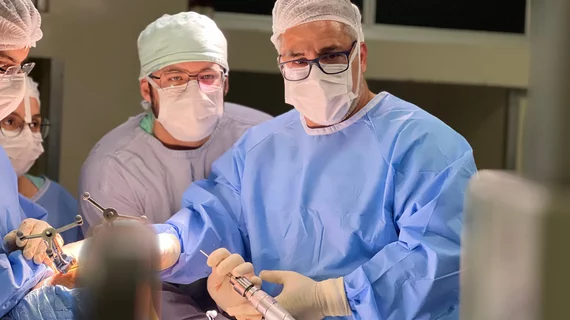
Hospital leaders who want to be ready for a mass casualty incident would do well to look for insights—and inspiration—from Samson Assuta Ashdod Medical Center.
The 300-bed Israeli institution, located about 17 miles north of the Gaza Strip, responded in exemplary fashion to the horrifying Hamas attacks of Oct. 7, 2023.
Researchers share lessons learned in a study published this month in Disaster Medicine and Public Health Preparedness.
For the research, Maximilian Nerlander, MBBS, and colleagues conducted semi-structured interviews with 19 healthcare workers who staffed the ER at Samson Assuta Ashdod during the attack.
News followers will recall that the raid combined brutal ambushes of civilians with frequent missile launches targeting population centers. Around 1,200 people died and 251 were taken hostage.
Nerlander and co-authors also drew on their own firsthand experience with humanitarian disasters.
While the team’s primary audience is the segment of the world’s healthcare workers stationed in present or potential war zones, the learnings they share are generalizable to non-war settings.
Nerlander et al. offer their findings in the form of seven key takeaways. Three of these are specific to wartime conditions. Here are summaries of the four that are readily adoptable just about anywhere a population-level disaster might strike.
1. A lack of information from official sources may complicate real-time response strategies.
The information vacuum encountered on October 7 is characteristic of surprise attacks and has been recognized in mass casualty incident (MCI) planning in the U.S. and elsewhere, Nerlander and co-authors point out.
The assailants’ decision to attack on a Jewish holiday, when military staffing levels were reduced and many religiously observant individuals avoided telephone use, “contributed to delays in information relay and reduced situational awareness,” the researchers write. “Comparable vulnerabilities may be encountered in healthcare systems in the U.S. and Europe during weekends and holidays.”
More:
‘These findings highlight the importance of considering predictable temporal vulnerabilities in emergency preparedness planning.’
2. Situational awareness can be obtained through alternative information sources.
Social media can convey important, albeit unverified, information faster than conventional media outlets, Nerlander and team report.
When preparing MCI plans, they emphasize, “decision-makers can assign staff to systematically gather information from a variety of sources, including patients, EMS, police and military as well as monitoring social media to inform command groups.”
More:
‘This also allows the rapid escalation of critical information regarding the development of an incident to the national command level.’
3. Protected healthcare infrastructure should be viewed as an important measure to maintain clinical operations, patient safety and staff performance.
It would be impractical for most U.S. hospitals to follow Assuta Ashdod’s approach to facility construction, which features thick concrete walls and bomb-shelter design. Still, Nerlander and co-authors advise, considerations of physical protection should be incorporated into future healthcare infrastructure and preparedness projects.
“In our setting, the hospital’s protected infrastructure not only safeguarded patients and staff but also supported operational continuity by allowing healthcare workers to focus on clinical care despite the ongoing rocket attacks,” the authors share.
More:
‘Many participants described the emotional toll associated with treating young patients who had severe injuries. While drills cannot fully prepare healthcare workers for the psychological impact of such encounters, familiarity with clinical workflows and pre-defined roles may help staff remain functional and maintain performance despite the emotional burden.’
4. Clinicians who do not routinely manage trauma patients can be integrated into the response effort while patient safety can be maintained through supervision by experienced emergency physicians.
While the feasibility of this approach may differ across hospitals and healthcare systems, Nerlander et al. write, the inclusion of physicians from non-trauma specialties in MCI preparedness “should be considered a potential strategy to expand clinical capacity during major incidents.”
“Under-triage of patients with occult but life-threatening injuries is a recognized problem in MCIs,” the authors point out, citing prior research. “In the present study the inability of EMS to reach many casualties resulted in patients arriving at the hospital by informal means, including transport by civilians and other wounded individuals. As these individuals bypassed prehospital assessment by health care professionals, injuries could potentially go unrecognized.”
More:
‘In the U.S., civilian-military cooperation has been identified as augmenting disaster response but is an area in need of expansion. Our findings support the critical need to enhance civilian-military cooperation through joint training exercises, coordinated management of large-scale events and a unified reporting system.’
There’s a good deal more, and the study is posted in full for free.

Dave P. has worked in journalism, marketing and public relations for more than 30 years, frequently concentrating on hospitals, healthcare technology and Catholic communications. He has also specialized in fundraising communications, ghostwriting for CEOs of local, national and global charities, nonprofits and foundations.