
2 men sue hospital for sending them home with each other’s families as newborns almost 40 years ago
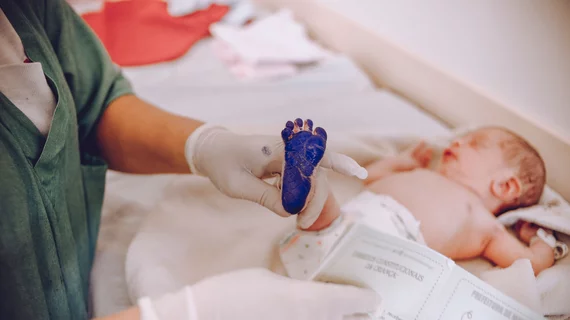
Of all the blunders for which a hospital can get sued, switching babies at birth has to rank among the least worried-about by staff or contract lawyers and risk managers. That doesn’t mean it never happens.
A lawsuit filed this month may serve as a reminder.
The action caught the eye of the public last week when two men and both their sets of parents accused Unity Medical Center in Grafton, North Dakota, of making the rare error and then looking the other way for decades.
The men, Kyle Bylin and Jeremy Morrison, both 38 years old, discovered they shared the same birthday—Jan. 26, 1988—after one took a DNA test and discovered the mom and dad who had raised him were not his biological parents.
A little detective work led to the men and their respective “parents” learning the truth: They’d both been raised by each other’s biological mother and father.
Local TV station KVLY-TV in Fargo notes the families first complained of the consequential mixup in 2024.
The suit, filed July 7, accuses the hospital of perpetrating deceit, medical malpractice and intentional as well as negligent infliction of emotional distress, KVLY reports.
The six plaintiffs—the two men with all four parents—are seeking monetary damages and have demanded a jury trial.
For its part, the hospital denies the allegations and is asking a judge to dismiss the case with prejudice.
A hospital’s feet held to the fire
The suit says Kyle Bylin and Jeremy Morrison were the only babies born at Unity Medical Center the day they came into the world.
The complaint suggests the only evidentiary explanation for the DNA test results is that the hospital sent each of the two babies home with the other’s true parents.
The text underscores that the serious mistake remained unknown to the plaintiffs for more than 35 years.
“The employees and/or agents of Unity Medical Center who switched the newborns and then failed to recognize or correct the error were acting within the scope of their employment and/or agency,” according to the complaint, as quoted by People magazine.
Hospital may use ‘comparative fault’ defense
In its own defense in the court of public opinion, the hospital expresses empathy but suggests legal actions may be rendered moot by a statute of limitations.
“Unfortunately, because of the passage of nearly four decades, the medical and staffing records that might have provided additional clarity no longer exist, and no members of the delivery team from that time are still employed by the hospital,” Unity Medical says prepared remarks sent to People. “While we deeply sympathize with the men and their families, we have found no evidence to support claims that Unity Medical Center or its staff were responsible for what occurred.”
KVLY-TV notes the hospital has also raised “comparative fault” as a potential defense, “suggesting damages, if any, could be attributable to parties other than the hospital.”
To this Jeremy Morrison, who now lives in Colorado, responds that he and Kyle “didn’t grow up in the same area; we couldn’t have gotten switched at daycare or anything like that.”
Earlier cases brought to mind
The Associated Press via ABC News lists a handful of similar cases from the recent past.
These include:
- In 2024, two women sued the government of Norway alleging a breach of human rights after discovering they had been switched.
- Two men who believe they were switched at birth in 1942 sued a Roman Catholic diocese in West Virginia in 2020, alleging negligence and breach of duty by the hospital where they were born.
- In 2024, two women sued the government of Norway alleging a breach of human rights after discovering they had been switched.
Remember the case of Kimberly and Arlena?
In a blog entry posted in April 2025, the healthcare security vendor Accutech recalls the high-profile case of Kimberly Mays and Arlena Twigg, who were “accidentally swapped” in Florida.
Coincidentally with the current case in North Dakota, the Florida error also happened in 1988.
Accutech—which, it should be noted, sells RFID systems for “wander management and infant protection”—points out that switched-at-birth cases “often fall under the broader category of patient misidentification legal cases, prompting regulatory investigations, internal audits and potential accreditation changes for the hospital involved. Incidents like these underscore the critical importance of accurate patient identification in healthcare.”
AP News has posted a video of Kyle Bylin and Jeremy Morrison telling their story in a little more than two minutes. View it here.

Dave P. has worked in journalism, marketing and public relations for more than 30 years, frequently concentrating on hospitals, healthcare technology and Catholic communications. He has also specialized in fundraising communications, ghostwriting for CEOs of local, national and global charities, nonprofits and foundations.