
Social worker at hospital rocked by violence and split over what to do about it: ‘Why can’t [stakeholders] sit together and talk?’
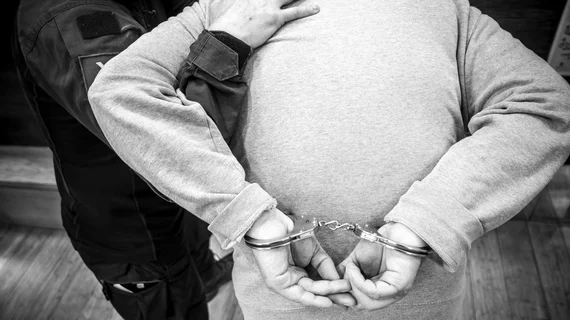
In hospitals serving mentally unstable patients, it’s no easy job to balance sensitive patient treatment with effective worker safety. One U.S. institution has been finding out just how hard it can be.
Tewksbury State Hospital in Massachusetts has seen four violent incidents in a month’s time that, at least taken together, were surprising enough to draw attention from local media outlets.
The spike in assaults seems to have coincided with a move last month by governmental overseers to prohibit security staff from wielding pepper gel, handcuffs and batons.
Why were hospital security personnel armed with such implements of enforcement in the first place?
Largely because Tewksbury Hospital is a go-to care site for patients referred from the state’s criminal justice system.
As such, it may stand as an example for any hospital striving to thread the needle between care mission and workplace security.
Hackles raised, requests granted—‘partially’
According to a May 26 article in the Boston Globe, the April disarming “prompted an outcry from local police and politicians, led the state to partially reverse its pepper-gel ban, and opened a wide-ranging debate over how to balance treatment and safety at the facility.”
The move followed an incident in fall 2025 in which a security worker used pepper gel on an aggressive psychiatric patient.
Globe reporter Jason Laughlin found this occurrence “prompted a reconsideration of what techniques were appropriate.”
Evidently the reconsideration process divided stakeholders.
Behavioral health hotspot
Some at Tewksbury State Hospital probably predicted, quietly, that violence would rise with April’s removal of restraining tools from security staff.
The 370-bed, state-owned facility located around 30 miles from Boston specializes in caring for patients with behavioral issues—and not just criminals.
According to the state’s bureau of public health hospitals, the average patient admitted to Tewksbury has been denied placement by three or more healthcare facilities “because of behavioral issues and/or due to a high risk history which necessitates increased resources to provide a safe environment.”
Thoughtful policy changes, unintended real-world consequences
The May 26 Globe report lists three serious patient-on-worker assaults plus one patient-on-patient attack occurred in April alone.
There may have been other incidents that didn’t make the headlines in Boston.
The state’s commissioner of public health, Robbie Goldstein, MD, PhD, tells the Globe that the change in security policies may have come with too little explanation.
“I don’t want to suggest that we weren’t thoughtful in [adjusting security policies],” Goldstein says. “Certainly, if you look in the rearview mirror, there are a lot of ways that we could have communicated it better.”
No good answers and, some say, not enough discussion
Other facts reported by the Boston Globe that help tell the story of the gathering disagreement over security practices at Tewksbury State Hospital:
- The hospital reported 214 physical assaults in 2025—a 16% decline from 2022.
- From January through March of this year, airport-style security screenings at a main entrance “nabbed dozens of knives, drugs and paraphernalia from visitors and newly admitted patients.”
- Patients walking away without permission dropped from 10 in 2024 to three in 2025.
On the other hand, the article quotes two hospital social workers who have felt uncomfortable with, for one thing, the stationing of armed police on patient floors.
“We were never told there were going to be officers present with loaded firearms on the locked psychiatric units,” says the first.
“There was this knee-jerk reaction,” adds a colleague. “Why can’t people sit together and talk?"
‘Like a bomb shelter’—one that may be ‘still unsafe’
Globe reporter Laughlin was given a partial tour of the hospital’s 700-acre campus.
Several sources told him the aging of the facilities is a risk factor in and of itself.
The main edifice, the Saunders Building, dates to 1963.
A couple dozen smaller structures are even older. One is a former railroad station “where trains once brought livestock in to feed patients,” Laughlin writes.
Tewksbury Hospital’s chief executive, Amy Dumont, DNP, MSN, RN, says the Saunders Building is “like a bomb shelter. When you’re trying to make changes, whether it’s electrical, gas, anything to upgrade, going through cinder block is a little bit different.”
The head of a union branch active in the hospital weighs in for the Globe as well.
“The fact of the matter remains,” says Jean Calvert-McClure, Department of Mental Health chapter president for the workers union SEIU509, “it’s still an unsafe environment.”
The full article is posted here (behind paywall).

Dave P. has worked in journalism, marketing and public relations for more than 30 years, frequently concentrating on hospitals, healthcare technology and Catholic communications. He has also specialized in fundraising communications, ghostwriting for CEOs of local, national and global charities, nonprofits and foundations.