
Physician shortage a looming national security crisis, researcher says
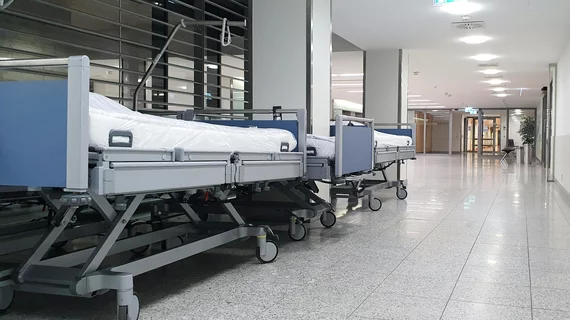
An academic researcher whose credentials include the James G. Martin Center for Academic Renewal and the Brownstone Institute is sounding an alarm about the growing shortage of doctors in the U.S., writing in an op-ed that by the “mid-2030s” the problem could reach a breaking point.
In a policy perspective published by The Hill, John Mac Ghlionn stated that the country could be facing a deficit of 187,000 physicians over the next decade, something he calls a “crisis” that can’t be fixed by “lazy policy”—poking at H-1B visas, which he equated to “raiding other nations for their medical talent.”
“For decades, American health systems have treated foreign medical schools as an offshore supply chain, pulling doctors out of developing countries to cover the gaps in rural Kansas and inner-city clinics. This is not a wise policy, and it’s certainly not sustainable,” Mac Ghlionn wrote.
He added that the assumption that medical experts from other nations can fulfill the needs of the medical labor market dates back to the 1970s, when panics about public health led lawmakers to believe immigration was a solution. Mac Ghlionn takes issue with that assertion, citing the size and diversity of needs in different parts of the U.S.
“A single pandemic, localized conflict, or sudden shift in immigration policy leaves American waiting rooms completely empty,” he wrote. “A nation of 330 million people cannot subcontract its physiological survival to the diplomatic climate of overseas states.”
The policy researcher went so far as to refer to the increasing shortage of doctors as a “massive national security risk,” asking why regulators can see the wisdom in securing supply chains for microchips but not the lives of his citizens.
In other words, Mac Ghlionn worries an aging population, colliding with a shortage of providers, will ultimately lead to the death of many, many Americans.
“Human bodies are the ultimate critical infrastructure, and a country that cannot heal its own population is inherently vulnerable,” he added.
Homegrown doctors
As for a workable solution, Mac Ghlionn recommended some major policy changes to encourage more people living within the U.S. to go into medicine, without fear it will lead to a lifetime of debt.
He proposes removing the 1997 Medicare residency cap and increasing funding to public medical schools. Further, Mac Ghlionn said the country should consider adopting a framework that offers “full-tuition coverage for domestic students” who pay back their bill by working in underserved counties in the U.S. that are in dire need of new providers.
Further, he thinks all of this is affordable.
“The U.S. throws billions of dollars at defense contractors for military hardware every year without as much as blinking; funding 20,000 new medical residency slots costs a fraction of a single stealth bomber program,” he wrote.
“A superpower capable of splitting the atom and putting human beings on the moon should not be defeated by the simple task of training enough physicians to care for its own citizens,” Mac Ghlionn added.
For more, read his full opinion piece over at The Hill by clicking here.
AMA calls for policy shift
The American Medical Association (AMA)—one of the most powerful lobbies representing providers—has been warning of the physician shortage for years, calling on Congress to act. While the group does not oppose immigration as part of the solution, it has questioned the logic of saddling doctors with huge student loan tabs.
In a report from June 2025, the AMA criticized provisions of the One Big, Beautiful Bill Act, which placed caps on borrowing for education and made it more challenging to pay loans back.
"[The] AMA has expressed serious concerns that changes in the federal student loan program proposed in the 2025 budget reconciliation bill would make medical school unaffordable for a majority of students, including those who might be the most highly qualified applicants,” Bobby Mukkamala, MD, Immediate Past President of the AMA wrote.
He added that the AMA supports a piece of legislation called the Specialty Physicians Advancing Rural Care Act, a piece of bipartisan legislation that would cater to a more favorable loan repayment program to physicians that agree to serve a rural community currently experiencing a shortage for a period of six years.
“At this point, the Health Resources and Services Administration estimates that more than 19,000 physicians are needed to overcome existing shortages in primary care and mental health care across the country,” Mukkamala warned.
For more, read his full analysis by clicking here.

Chad is an award-winning writer and editor with over 15 years of experience working in media. He has a decade-long professional background in healthcare, working as a writer and in public relations.