
Is RFK Jr. really conducting an ‘assault on vaccines’? And more high-level news notes
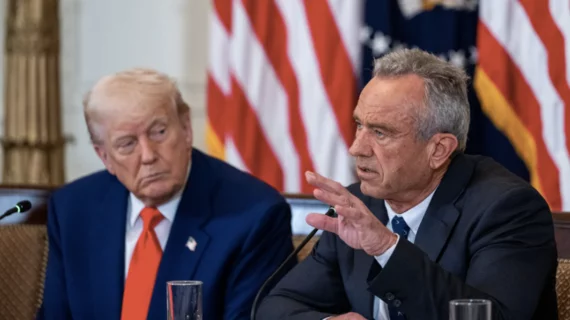
The CDC has gone ahead and changed its recommendations for childhood immunizations. The gnashing of teeth has only just begun.
How could it be otherwise in a nation so bitterly divided over just about everything, including medical science? Really the changes are not drastic, reducing the number of diseases proactively thwarted from 17 to 11 and maintaining paid coverage measures for parents who prefer the former. The new guidelines also make it voluntary rather than mandatory for state health officials to report jab counts to CMS. Still, many experts detest the move and are roundly trashing it. A small sampling:
- “This change should be viewed within the broader context of [HHS] Secretary Kennedy’s assault on vaccines.”—Amanda Jezek, senior VP with the Infectious Diseases Society of America
- “Kennedy’s decision will harm and kill children, like all of his anti-vaccination decisions will.”—virologist James Alwine, PhD
- “The abrupt change to the entire U.S. childhood vaccine schedule is alarming, unnecessary and will endanger the health of children in the United States.”—immunologist and former federal vaccine advisor Helen Chu, MD, MPH
For their part, Trump administration health leaders stand their ground with succinct statements of principle that are probably too blithe for the more determined critics.
- “After an exhaustive review of the evidence, we are aligning the U.S. childhood vaccine schedule with international consensus while strengthening transparency and informed consent. This decision protects children, respects families and rebuilds trust in public health.”—HHS Secretary Robert F. Kennedy Jr.
- “The data support a more focused schedule that protects children from the most serious infectious diseases while improving clarity, adherence and public confidence.”—Acting CDC Director Jim O’Neill
- “Science demands continuous evaluation. This decision commits NIH, CDC and FDA to gold standard science, greater transparency and ongoing reassessment as new data emerge.”—NIH Director Jay Bhattacharya, MD, PhD
- Ongoing coverage of the development and its heated aftermath is profuse.
Meanwhile CMS is doling out $50B to advance rural health in all 50 states.
Texas hits the jackpot, scoring $281.3M, while New Jersey brings up the rear with a still hefty $147.3M. Announcing the awards last week, CMS said the monies are intended to help states expand access to care in rural communities, strengthen the rural health workforce, modernize rural facilities and technology and support innovative models that bring high-quality, dependable care closer to home.
- HHS Secretary Kennedy notes that more than 60 million Americans reside in rural areas. “This historic investment puts local hospitals, clinics and health workers in control of their communities’ healthcare,” he says. “Thanks to President Trump’s leadership, rural Americans will now have affordable healthcare close to home, free from bureaucratic obstacles.”
- CMS Administrator Mehmet Oz, MD, MBA, tips his cap to states that are “stepping forward with bold, creative plans” that will “support the communities that keep our nation running.”
- For details, see the full announcement.
All this year you’ll do well to keep an eye on healthcare costs, Medicaid changes, direct-to-consumer medication sales, vaccination battles (sound familiar?) and consumer-level AI for healthcare.
Happily, these are five storylines the capable health reporters at Axios will be following for healthcare watchers like you and me. “If 2025 delivered shockwaves to public health and federal health programs, this year promises more chaos as providers, payers, consumers and policymakers deal with the repercussions,” Adriel Bettelheim writes Jan. 5. “The sweeping changes to Medicaid and the Affordable Care Act, the upending of the vaccine system, and new ways people purchase drugs foreshadow the most significant changes to health markets since the passage of Obamacare.”
Also worth your while:
- Google AI Overviews put people at risk of harm with misleading health advice (The Guardian)
- Medicaid’s structure actually invites waste and fraud (American Institute for Economic Research)
- Trump’s embrace of pot has Republicans in Congress fuming (Politico)

Dave P. has worked in journalism, marketing and public relations for more than 30 years, frequently concentrating on hospitals, healthcare technology and Catholic communications. He has also specialized in fundraising communications, ghostwriting for CEOs of local, national and global charities, nonprofits and foundations.