
New food pyramid cheered and contested, doctors vs. gun harms & other high-level briefings
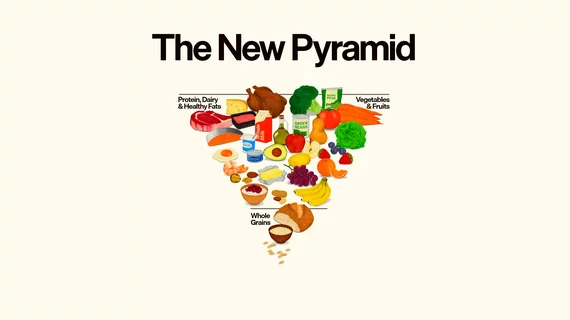
Keto-diet champions will like the new food pyramid’s emphasis on proteins, including those high in saturated fats.
Not everyone shares their predisposition. Some detractors are slamming the update as a turning back of the clock to Eisenhower-era nutritional guidance. Others suspect undue industry influence. Undaunted by the criticisms he must have known were coming, HHS Secretary Robert F. Kennedy Jr. introduced the revised guidelines Jan. 7 with an assist from Agriculture Secretary Brooke Rollins.
- “These guidelines return us to the basics,” Kennedy said in prepared remarks. “American households must prioritize whole, nutrient-dense foods—protein, dairy, vegetables, fruits, healthy fats and whole grains—and dramatically reduce highly processed foods. This is how we Make America Healthy Again.”
- The executive leadership team’s stated aim is to “realign” America’s food system to support the nation’s farmers, ranchers and companies producing “real food.” “Thanks to the bold leadership of President Trump,” Rollins added, “this edition of the Dietary Guidelines for Americans will reset federal nutrition policy, putting our families and children first as we move toward [becoming] a healthier nation.”
- Given our time’s prevalence of diabetes, obesity and chronic illness, would “turning back the clock” necessarily be a bad thing?One dietary expert who thinks so is Marion Nestle, PhD, MPH, a professor emeritus of molecular biology, nutrition and public health at New York University. After acknowledging some “good stuff” in the new guidelines, not least avoidance of processed foods, Nestle opines that the recommendations are “muddled, contradictory, ideological and retro.” She tells MS NOW she believes encouraging a more protein-based diet harks back to “the diet of the 1950s.” Considering that comment in context, it seems safe to assume she intends that critique as a dismissal.
- Also casting doubt on the soundness of the new pyramid is the advisory role played by Big Meat and Big Dairy in formulating the recommendations. A Jan. 7 news report in STAT covers that ground. “Reviewers’ ties to special interests, disclosed in a report published alongside the guidelines, [are] especially notable considering how administration officials have railed against conflicts of interest in the development of previous dietary guidelines,” the reporters write.
- A dedicated HHS website promoting the new guidelines, RealFood.gov, faces the challengers head-on. “We are ending the war on protein,” one section reads. “Every meal must prioritize high-quality, nutrient-dense protein from both animal and plant sources, paired with healthy fats from whole foods.” The plan calls for 1.2 to 1.6 grams of protein per kilogram of body weight per day. It also recommends three daily servings of vegetables, two of fruits and two to four of fiber-rich whole-grain foods.
- HHS maintains that the new food pyramid is a science-based and commonsense response to clear and present dangers. “The U.S. faces a national health emergency,” the agency explains in multiple communiques. Nearly 90% of healthcare spending goes toward treating chronic disease, much of it linked to diet and lifestyle, the agency points out. In addition, more than 70% of American adults are overweight or obese, and nearly 1 in 3 adolescents has prediabetes. No less telling, HHS notes, is that diet-driven chronic disease “now disqualifies many young Americans from military service, threatening national readiness and limiting opportunity.”
- For more from Team Kennedy on the changes, see an HHS fact sheet and/or the 10-page guidance document itself. For an especially deep dive, peruse the document’s 418 pages of appendices. And for more of the spirited brouhaha playing out in the media, look anywhere national news is covered.
Did we really think we were completely out of the COVID-19 woods?
Would that it were so. New research by CDC scientists shows many Americans are still suffering and, yes, dying at the hands of the SARS-CoV-2 virus. “Millions of people continue to experience illness and seek healthcare each year due to COVID-19, and tens of thousands to hundreds of thousands need hospitalization or die,” the investigators write in a study published Jan. 5 in JAMA Internal Medicine.
- The postpandemic period they looked at ended in September 2024. In the year leading up to that endpoint, around 33 million got sick with COVID-associated illnesses. Approximately 880,000 had to be hospitalized, and more than 100,000 passed away.
- For high-risk populations, vaccination and early treatment remain critical. Note well, the scientists underscore, thatCOVID-19 “continues to disproportionately affect people 65 years and older whose immunity may wane faster than younger adults and who account for most hospitalizations and deaths.”
- The study is available in full for free.
Doctors could help mitigate the toll on health and life taken by guns.
So suggest researchers at UC-Davis who are calling for physician-prompted conversations—however uncomfortable—with gun-owning patients who may be at risk for self-harm. “Firearm ownership in the United States is increasing, as is the belief that firearms keep households safe, even though having a firearm in the home increases household members’ risk of firearm injury and death,” write psychiatrist Amy Barnhorst, MD, and colleagues in a study published in NEJM Evidence. “Research shows that firearm owners and clinicians are receptive to conversations with each other about firearm injury prevention.”
- Barnhorst’s interest in the subject isn’t just academic. She’s director of California’s BulletPoints Project, which trains providers how to spot patients at risk of harm by firearms and how to broach the topic so as to reduce that risk. “Patients view their healthcare provider as a trusted source of information,” she tells UC-Davis Health’s news operation. “That trust needs to be maintained. Our framework gives clinicians practical tools to identify risk and engage patients in harm-reduction strategies without judgment or politics.” Learn more about it here.
Also worth your while:
- Subsidies won’t fix America’s healthcare ‘crisis’ (The Hill)
- Mark Cuban on the $38T national debt and the absurdity of U.S. healthcare: We wouldn’t pay for potato chips like this (Fortune)
- NYC hospitals prepare as thousands of nurses threaten to strike next week (Gothamist)
From HealthExec’s sibling outlets:
- Cardiologist reinstated after being fired for role with CDC vaccine panel (Cardiovascular Business)
- Robotic-assisted navigation improves accuracy, halves radiation dose during interventional procedures (Radiology Business)

Dave P. has worked in journalism, marketing and public relations for more than 30 years, frequently concentrating on hospitals, healthcare technology and Catholic communications. He has also specialized in fundraising communications, ghostwriting for CEOs of local, national and global charities, nonprofits and foundations.