
Kennedy appoints new members to Preventive Services Task Force, as committee departs from primary care emphasis
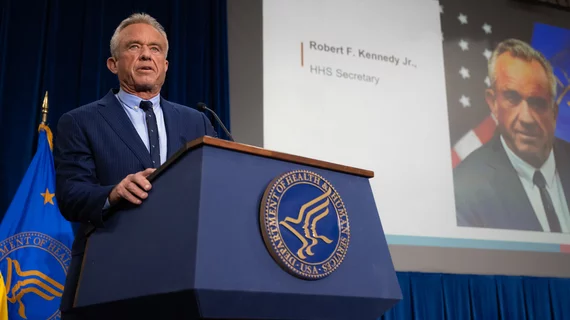
A key panel that advises regulators on healthcare public policy decisions related to the prevention of illness has been reinstated after a year-long hiatus, with U.S. Department of Health and Human Services (HHS) Secretary Robert F. Kennedy Jr., appointing eight new members, bringing the total to the customary 16.
The Preventive Services Task Force, which helps to shape what medical care should be fully covered by health plans without deductible or copay costs from patients, typically meets three times a year to discuss what protocols should be, among other things, cancer screenings. The group last met in 2025.
Media reports, citing sources familiar with the matter, indicated last year that Kennedy wanted to dismiss the entire panel. But that appears to no longer be the case—at least for now.
In an announcement, HHS revealed the new list of appointments, including the new chair of the task force. The full list, along with the provided reason for their inclusion, includes:
Seth J. Corey, MD, appointed as the new chair. Corey is a pediatric hematologist-oncologist at Cleveland Clinic with 41 years of experience caring for children and young adults, and was appointed to the task force for his clinical and medical evidence expertise.
Patrick K. Hunter, MD, a pediatrician at Pensacola Pediatrics and assistant clinical professor at Florida State University with 34 years of experience, was appointed to the committee for his expertise in children’s health, rural communities, evidence assessment, bioethics, and clinical guidelines.
Ronald P. Karlsberg, MD, a clinical professor of medicine at Cedars-Sinai and UCLA with 48 years of cardiovascular care experience. He was appointed for his expertise in heart disease prevention, evidence-based screening and risk assessment, and applying clinical evidence to patient care.
Venkatesh L. Murthy, MD, PhD, a preventive cardiology professor at the University of Michigan with 14 years of cardiovascular care experience, has expertise in heart disease prevention, medical imaging, evidence assessment, and emerging technologies such as AI.
Stephen T. Parente, PhD, a University of Minnesota professor with 31 years of experience in healthcare research and policy, was appointed for his knowledge in evaluating healthcare costs, value, and their impacts on patients and care delivery.
Goldie Stands-Over-Bull, MD, a family medicine physician at Texas Native Health with four years of experience caring for Native American patients across rural and urban settings. Her focus is on women’s health, adolescent medicine, and chronic disease management.
Louis J. Wilson, MD, a gastroenterologist with 29 years of experience caring for patients with gastrointestinal diseases. He was appointed to advise on disease prevention in his field.
Dennis W. Wulfeck, MD, a diagnostic radiologist with 33 years of experience in medical imaging and disease detection. Wulfeck joins based on his background researching medical screenings and developing best practices.
The makeup of the new members shows there is growing concern over preventing heart disease and specific cancers, though ultimately the task force will advise on mental health matters, kidney disease, diabetes and other ailments that carry potentially high costs if not detected and treated early.
“Prevention is one of our most powerful tools for confronting chronic disease. The Preventive Services Task Force’s recommendations influence preventive care across America, and Americans deserve recommendations grounded in rigorous, objective science,” Kennedy said in a statement. “We are strengthening the Task Force to ensure it asks hard questions, follows the evidence wherever it leads, and maintains the highest standards of scientific integrity.”
A change in focus
In a statement responding to the new additions, Willie Underwood, III, MD, president of the American Medical Association, called the shift a “significant departure” from the traditional makeup of the body, as it typically helps to shape primary care decisions related to the overall health and well-being of patients.
“The Preventive Services Task Force plays an important role in helping physicians and patients make evidence-based decisions about preventive care. Its credibility has been built on a membership grounded in prevention and primary care—the physicians who routinely deliver preventive services and understand how recommendations translate into clinical practice,” Underwood said in a statement.
“We believe maintaining a strong primary care voice must remain central to its work. As the USPSTF moves forward, its recommendations must continue to be based on a transparent, rigorous, independent scientific process and informed by the perspective of physicians who deliver preventive care to patients every day,” he added.
“This is essential for ensuring that task force recommendations are trusted by clinicians and followed by patients.”
A date has not been set for the new panel to host its first meeting.

Chad is an award-winning writer and editor with over 15 years of experience working in media. He has a decade-long professional background in healthcare, working as a writer and in public relations.