
House Democrats push for last-ditch amendment to protect ACA subsidies for 3 years
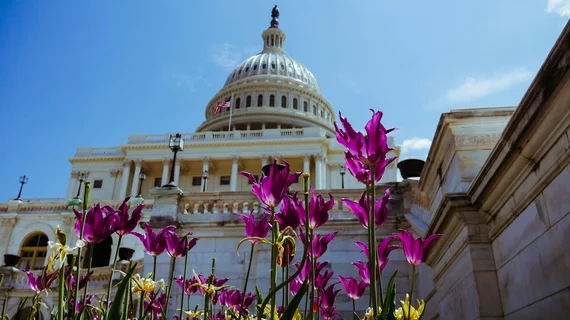
The Democratic Minority Leader of the U.S. House of Representatives, Hakeem Jeffries (D-NY) and his colleague, Rep. Katherine Clark (D-MA), said they will be adding an amendment to the funding bill that would reopen the government, once it enters their chamber for a vote on Wednesday.
The bill passed through the Senate after seven Democrats and one Independent opted to break the deadlock over the renewal of Affordable Care Act (ACA) subsidies, which were the central issue of contention that led to a more than 40-day shutdown of the federal government.
As it stands, there are no renewals contained within the “compromise” the two parties broached in the Senate—the compromise being that Republicans have given a non-binding promise to put the subsidy renewal up for a vote before the end of the year.
Jeffries and Clark hope to change that, as their amendment would extend medical insurance subsidies for another three years. However, given the Republican majority in the House—which does not have a filibuster rule requiring any threshold for bills to pass—their amendment has virtually no chance of being added to the current funding agreement.
It is expected to pass on Wednesday, after which time President Donald Trump promised to swiftly sign it. The Senate approved the measure in a 60-40 vote on Tuesday.
“House Republicans: Welcome back from your taxpayer-funded, seven-week vacation,” Jeffries told reporters before a committee meeting on Tuesday. “You now have an opportunity to actually take some action in an area of this healthcare crisis by working with Democrats, before the Rules Committee this evening, to extend the ACA tax credits.”
The goal of Jeffries appears to be to get Republicans on record voting “nay” on such a measure, especially as Americans are experiencing sticker shock over the cost of medical insurance.
With open enrollment now happening on the Affordable Care Act marketplace, an analysis from MoneyGeek found bronze-level insurance prices rose between 9% and 30% in every region of the country—with two states, Arkansas and New Mexico, seeing premiums spike more than 50%.
HealthExec looked into the full cost of silver-level insurance plans—representing the middle tier—and found they cost between $650 and $999 per month at full price on average, depending on the enrollee's age and locale.
The enhanced subsidies—called tax credits—were put in place to contain healthcare prices during the COVID-19 pandemic, passed as part of the American Rescue Plan Act in 2021. They have now officially lapsed heading into 2026, leaving Americans to take the brunt of rising premiums.
The ACA now operates on the same tax credit framework it did prior to the global pandemic.
Minimal concessions
It’s important to note that the deal reached to open the government was the same one proposed when the shutdown began on Oct. 1, meaning Democrats in the Senate effectively caved to Republican demands regarding the ACA.
However, Republicans did agree to support the reinstatement of all federal staff fired while the federal government was closed—including 1,200 people in the U.S. Department of Health and Human Services.
The funding bill also stipulates that there will be no new firings until January, after which time there are no further restrictions on staffing purges.
It’s unclear when the government will officially reopen, but it could be as early as next week.

Chad is an award-winning writer and editor with over 15 years of experience working in media. He has a decade-long professional background in healthcare, working as a writer and in public relations.