
Healthcare in the midterms: A look ahead to decision day
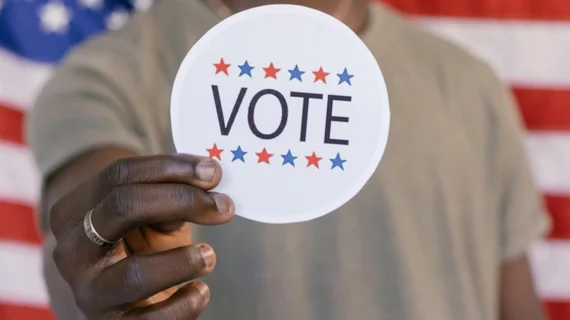
Will healthcare be the top issue voters take into the polls come November?
A trusted organization that keeps tabs on the sector’s place in national debates looks at the odds of the economy falling into second place this year.
The organization is KFF, formerly the Kaiser Family Foundation, which has posted an election 2026 preview as seen through the lens of the healthcare stakeholder in many of us.
Here are four takeaways.
1. The economy has topped voters’ priorities in recent elections. This year healthcare may bump it down.
KFF analysis of voting-site exit data shows healthcare has been more top-of-mind for voters immediately following periods of national debate on healthcare reform. This was the case in elections held during the Clinton and Obama presidencies, KFF reminds. Some will remember the rise and fall of Hillarycare during the former and the passage of the Affordable Care Act (aka Obamacare) during the latter.
“In these instances, healthcare costs were key issues, with political debate centering around affordability,” KFF points out. Yet, over the past three decades of exit polls, “healthcare itself has only been ranked the No. 1 issue by voters once, during the 2018 midterms after Republican attempts to repeal and replace the ACA failed dramatically in the Senate.”
Will this be the year healthcare reprises its lone recent “victory” atop voters’ collective list of concerns?
2. Voters who tend to prefer Democrat candidates are more likely than their Republican-favoring peers to name healthcare as an important election issue.
Recent pre-election KFF health tracking polls have borne this out. For example, in 2018, when healthcare was the No. 1 issue for all voters, about one third of Democratic voters (34%) said it was important for 2018 candidates to talk about healthcare, compared to one in five Republicans (20%) who said the same, KFF reports.
“In more recent elections when healthcare issues focused on specific topics like abortion rights and COVID-19, between a quarter and half of Democratic voters picked these issues, versus about one in ten, or fewer, Republican voters.”
3. Democrats have historically had advantage on healthcare, Republicans on the economy.
Of course, overlap exists. “Recent KFF polls have found that healthcare costs are a top economic worry, with many adults saying they have difficultly affording these costs, they are burdened by healthcare debt, or that they delay or skip care due to high costs,” KFF states.
Given that healthcare costs sit at the intersection of both healthcare and the economy, who do voters say they trust on this issue? KFF answers its own question:
“[V]oters often say the Democratic candidate is better suited to handle healthcare while the Republican candidate is better suited to handle the economy,” KFF notes. “In the 2012 and 2016 elections, President Obama and Secretary Clinton had more than 10-percentage point leads over Governor Romney and President Trump, respectively, in the share of voters who said they trusted each on healthcare.”
4. There are many months before the midterm elections, and events such as the war in Iran may shift electoral concern.
In any case, recent KFF pre-election polls show the public remains concerned about the No. 1 issue of the 2024 election: the economy.
However: “Recent polls also suggest that the role of healthcare costs among voters’ economic concerns appears to be on the rise compared to previous election cycles,” KFF reports.
More:
In more recent KFF polling from January 2026, healthcare costs are now voters’ top economic concern (31% of total voters say they are ‘very worried’). This is the case across partisanship, with substantial shares of Democrats (33%), independents (36%) and Republicans (25%) saying they are ‘very worried’ about being able to afford health care for themselves and their families.

Dave P. has worked in journalism, marketing and public relations for more than 30 years, frequently concentrating on hospitals, healthcare technology and Catholic communications. He has also specialized in fundraising communications, ghostwriting for CEOs of local, national and global charities, nonprofits and foundations.