
Connection uncovered between liability protections and downsizing decisions—in nursing homes, at least
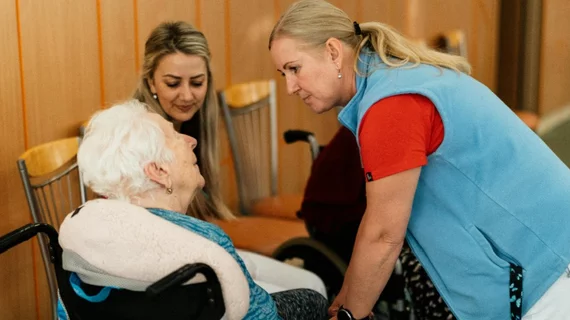
When nursing homes lose their fear of getting sued for substandard care quality, they tend to make do with fewer caregivers, a new study reveals.
The effect seems largely confined to certified nursing assistants, or CNAs, so it may not generalize to hospitals or provider organizations other than nursing homes. In hospitals, care workers at the CNA level are more commonly called patient care technicians, nurse assistants or hospital assistants.
Still, the researchers surmise their study “suggests that the threat of liability may contribute to quality of care even though some evidence suggests that tort lawsuits themselves do not seem to improve care.”
JAMA Health Forum published the multi-institution study June 1.
For the study, first author Jill Horwitz, PhD, JD, MPP, and colleagues leveraged the “natural experiment” afforded them by COVID-era rule relaxations: To cope with the pandemic, many states granted nursing homes immunity from tort liability for harms to nursing home residents.
The team used a difference-in-differences model to analyze nursing home staffing patterns discernable from CMS’s Nursing Home Compare, Payroll Based Journal Daily Nurse Staffing and weekly COVID-19 tracking data entered between 2018 (pre-pandemic) and 2023 (when the public health emergency ended).
Where have the CNAs gone?
Their key findings and observations included:
- During the COVID-19 pandemic, approximately 80% of the U.S. states abruptly implemented some form of tort immunity for nursing homes.
- Of 13,205 nursing homes in the analysis, 11,382 (86.2%) were subject to tort immunity and 1,823 (13.8%) were not.
- The average nursing home immunized from liability is estimated to have 7.9 fewer hours daily. “Spread equally across all residents,” the authors remark, “this amount of time (5.2 minutes) might seem small, but for a patient in need, nearly 8 hours of time could make a substantial difference.”
- Nursing homes immune from tort liability exhibited less staff time per patient per day than nursing homes in states that did not grant tort immunity. This effect was pronounced in CNA staffing and negligible in RN and LPN staffing. “[I]t is among the CNAs, who comprise two-thirds of the clinical staff, where we find the association between staffing and tort immunity.”
Less risk of liability now, worse staff shortages later
“Expecting an overwhelming volume of litigation, many states adopted tort immunity to protect nursing homes and their staff during the COVID-19 pandemic,” the authors remind.
More:
‘These laws—some of which are still in effect—appear to have had the unintended consequence of reducing staffing levels, perhaps impairing the deterrent effects of exposure to tort law by lowering incentives for administrators to search for nursing staff during a period when there were extreme shortages, thus, high nursing prices.’
Horwitz and colleagues call for more research to tease out how it was, exactly, that tort immunity changed nursing home behavior—and to learn whether such immunity affects quality of care and patient outcomes.
In coverage of the study by UCLA Health’s news team, corresponding author David Zingmond, MD, PhD, says the robustness of the changes was surprising given that the liability protections are not associated with a defined monetary reward or fixed staffing target.
“Relaxing medical liability results in a worse staffing environment,” Zingmond adds. “Lower staffing negatively impacts care, and nursing home residents are among the most vulnerable patients.”
Read the study here and the UCLA item here.

Dave P. has worked in journalism, marketing and public relations for more than 30 years, frequently concentrating on hospitals, healthcare technology and Catholic communications. He has also specialized in fundraising communications, ghostwriting for CEOs of local, national and global charities, nonprofits and foundations.