
Bill in Congress would rein in PBMs, force divestment from pharmacies
Two bills in the U.S. House of Representatives and Senate have been reintroduced to disrupt the vertical supply chain of drugs by banning pharmacy benefit managers (PBMs) from owning retail stores. The legislation has bipartisan support in both bodies of Congress.
The legislation—short for the “Patients Before Monopolies Act” —would require any company that owns both a traditional PBM and a retail pharmacy to divest from the latter. The proposal has floated around Congress since 2024, and similar laws have been adopted by states.
A law in Arkansas that would stop any PBM company operating in the state from owning a pharmacy that distributes drugs directly to patients has been challenged by an industry lobby that argues the rule is unconstitutional.
The legislature in Tennessee has passed a similar bill, which has yet to be signed into law.
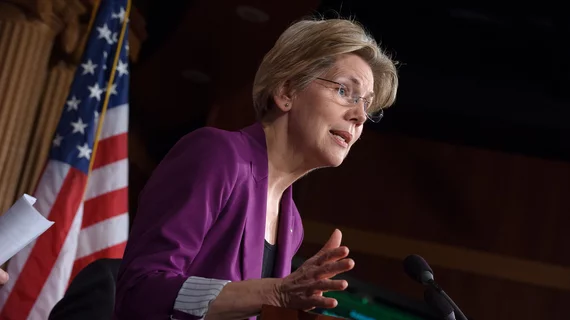
Looking at the potential federal law, it was introduced first in the Senate this week by Elizabeth Warren (D-MA) and Josh Hawley (R-MO). The duo are acting as primary co-sponsors of the federal act.
An announcement from Warren and Hawley listed supporters in the House, including Diana Harshbarger (R-TN.) and Jake Auchincloss (D-MA.).
“Americans are paying more and more for healthcare while seeing less in return. PBMs are at the center of a broken system that rewards middlemen while driving up costs for patients and pushing out independent pharmacies,” Hawley said. “Working Americans deserve better. This legislation is a major step toward restoring transparency and making healthcare more affordable for every American.”
Disrupting the ‘big three’
In the statement from supporters, they claimed that over time the conglomerates that own the three major PBMs—UnitedHealth Group, CVS Health and Cigna—have together exercised “control over every link in the prescription drug delivery chain” by both reimbursing and operating pharmacies.
That creates a dynamic that crushes independent pharmacies in favor of “bigger profits for the corporate healthcare giants.”
“As a lifelong pharmacist, I’ve seen firsthand how PBMs game the system. When the same corporate giant that sets reimbursement rates also owns the pharmacy collecting them, that’s not a free market—it’s a rigged one,” Congresswoman Diana Harshbarger said. “We have antitrust laws for a reason.”
“When monopolies squeeze out independent pharmacies, raise costs for patients, and reduce consumer choice, Congress has a duty to restore fair competition. The Patients Before Monopolies Act ends this blatant conflict of interest once and for all,” she added.
Beyond barring the ownership of retail pharmacies, the potential law would empower the Federal Trade Commission (FTC), the Department of Justice (DOJ), and other federal authorities, to enforce the law and seek to recover funds from patients forced to pay more for drugs as a result of the vertical integration of PBMs.
The act would also require PBM companies to “delink” from Medicare Part D to reset drug pricing.
Even with bipartisan support, it’s unclear how likely the bill is to pass. It’s recently reintroduced and this is a developing story.

Chad is an award-winning writer and editor with over 15 years of experience working in media. He has a decade-long professional background in healthcare, working as a writer and in public relations.