Fans and foes of medical debt relief | Heat on the Hill for payer CEOs | One and done with algorithmic care | and more briefings
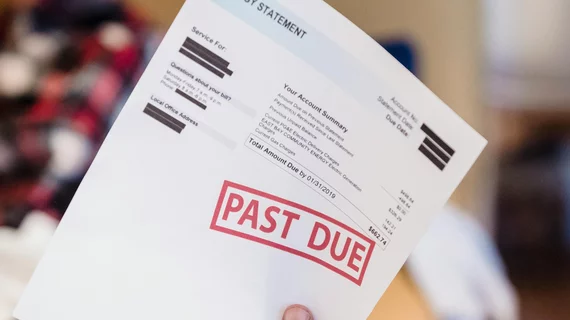
Several states use taxpayer dollars to help struggling residents pay down medical debt. One is considered a leader of the movement—by critics as well as proponents.
That would be North Carolina. And why not? The Tar Heel state became the first to go live with such a program, launching a dedicated operation in July 2024. Others have followed suit since then or are working on doing so now. But it’s North Carolina’s Medical Debt Relief Incentive Program that continues to catch the eye of consumer advocates and reporters seeking a success story to demonstrate the viability of the approach. Case in point: rosy national coverage from National Public Radio posted Jan. 21. “I’m excited for the people of North Carolina,” Allison Sesso, CEO of a charity called Undue Medical Debt, tells NPR reporter Alex Olgin. “It pairs not just medical debt relief going backwards”—meaning old medical debts—“but also fixes the upstream problems” of newly accruing bills. Here’s more to know from the coverage and other sources.
- North Carolina has around 100 hospitals. Pretty much all of them have bought into the program. The institutions were incentivized by the program’s offer of enhanced Medicaid payments. These are administered through the state’s Healthcare Access and Stabilization Program, or “HASP.” The North Carolina Healthcare Association says HASP allows North Carolina’s hospitals to pay for the non-federal share costs of Medicaid expansion. How? By growing provider participation in Medicaid and, in the process, buttressing the bottom lines of strapped rural hospitals.
- HASP gives participating hospitals the gift of financial predictability, which supports hospital workers as well as patients, the association explains. HASP adds that the robustified income stream allows hospital leadership to invest in the health and wellness of their communities without shortchanging budgets for facilities upkeep or equipment modernization.
- It’s not hard to understand why relieved consumers and benefiting hospitals appreciate this kind of thing. Around 20 million Americans—1 of every 12—is in debt to at least one healthcare provider. The total national tab is estimated at $220 billion. This translates to around 14 million Americans owing more than $1,000 in medical debt and about 3 million on the hook for medical debt of more than $10,000. Much of the burden is carried by people who have disabilities, poor health, low incomes and no insurance. Among the states following North Carolina’s lead in chipping away at this Mount Doom, or taking steps to do so, are Illinois, Pennsylvania, New Jersey, Arizona and Rhode Island. Others, including New York, Michigan and Louisiana, lack a statewide program but have projects in place at county or local levels.
- One close observer seems to like the trend but worries about replicability across the nation. As things now stand, “Your zip code is going to determine the protections you have,” Heather Howard, JD, a professor in the school of public and international affairs at Princeton, tells NPR. “We shouldn’t be talking about a static problem,” she adds, because the problem of unmanageable medical debt “is going to grow.”
- Not everyone is a fan. “If HASP were actually using Medicaid funds to forgive debt, it would be a wasteful and inappropriate use of Medicaid dollars, spending at least $1.70 for every $1 of debt in the first three years of the [North Carolina] program,” the nonpartisan Committee for a Responsible Federal Budget commented several weeks after the state instituted its debt relief program. “In contrast, debt can be cancelled for pennies on the dollar.” The group further stated that most of HASP’s benefits accrue to non-Medicaid patients. HASP “cannot be justified as a reimbursement for hospitals’ uncompensated care,” the group said, “because hospitals already benefit from numerous other overlapping payments.”
When it comes to assigning blame for the sky-high cost of healthcare, many Americans find big private insurers an easy target.
It’s not like the companies haven’t brought much of the ire upon themselves. After all, their jaw-dropping executive compensation numbers don’t exist in a vacuum. Rightly or wrongly, they’re widely associated with claims denials and delays. These tensions were on display at not one but two congressional hearings last week. In the hot seats were executives of some of the biggest players in the payer space. The New York Times was there and probably had a darn good seat.
- ‘Members of both parties slammed the insurers on several grounds,’ reports the Times’s Reed Abelson, whose main beat is the business of healthcare. “Even amid sparring over whether the Affordable Care Act (Obamacare) plays a role in contributing to higher premiums and out-of-pocket expenses, Republicans and Democrats expressed widespread agreement that the insurers had failed to contain costs.”
Key quotes from some grillers and grillees as reported by Abelson:
- ‘The cost of health insurance is driven by the cost of healthcare. It is a symptom, not a cause.’—Stephen J. Hemsley, chief executive of UnitedHealth Group
- ‘You all have been very delinquent in your duty.’—Rep. Greg Murphy (R-NC), a physician who supports the idea of breaking up insurance conglomerates
- ‘Our healthcare system is bankrupting and failing us.’—Paul Markovich, chief executive of Ascendiun, parent of Blue Shield of California, who came closer than any other CEO to issuing an apology
- ‘You own a big chunk of the healthcare cost.’—Rep. Alexandria Ocasio-Cortez (D-NY), who noted that some of her concerns were bipartisan
- “This is not your fault. It is Republicans’ fault.”—Rep. Frank Pallone (D-NJ), intentionally or inadvertently signaling that bipartisanship on the issue is only ever going to go so far
Drug companies and ‘public health types’ are apparently collaborating to push treatments designed for a few elevated-risk patients on the many patients whose relative risk is quite low.
The observer of the problem in the present context is the book author and independent bulldog journalist Alex Berenson. At his Substack, Unreported Truths, Berenson recounts a recent first visit—likely his last—with a primary care doctor who works for the UnitedHealth subsidiary Optum. “He didn’t seem like a bad guy, he was pleasant enough,” Berenson writes. “But he didn’t seem like a physician, either. He was a functionary treating a chart according to an algorithm, not a doctor treating a patient after a decade of training.”
- In recent years, many of us have been there.
- You too? Read the rest and sigh.
- You too? Read the rest and sigh.
Also of interest:
- The ObamaCare enrollment apocalypse that wasn’t … The ACA’s annual open enrollment ended Thursday, and what do you know? The media-fueled panic over the expiration of the pandemic-era enhanced subsidies turned out to be a false alarm. (The Wall Street Journal)
- Charted: The big measles surge ... We’ve all heard that cases are on the rise, but the reality is that they’re skyrocketing. (Axios)
- Colorectal cancer is now the leading cause of cancer death for people under 50—what you need to know ... It’s still unclear why colorectal cancer is rising in younger adults, though lifestyle, environmental and biological factors may all play a role. (Health.com)
From HealthExec’s sibling news outlets:
- Pediatric patients exposed to more imaging radiation at nonchildren’s hospitals (Radiology Business)
- Vascular surgeon accused of double murder pleads not guilty (Cardiovascular Business)

Dave P. has worked in journalism, marketing and public relations for more than 30 years, frequently concentrating on hospitals, healthcare technology and Catholic communications. He has also specialized in fundraising communications, ghostwriting for CEOs of local, national and global charities, nonprofits and foundations.