
Neuralink users reveal power to move robotic arms, play video games with their minds
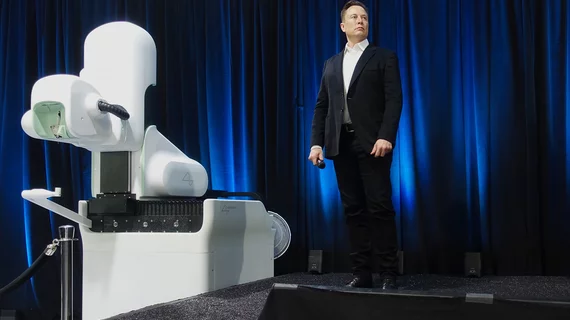
Elon Musk’s Neuralink is showing improvement. In multiple posts on X, patients implanted with the medical device use their thoughts to move robotic limbs, dancing beyond the previous accomplishments of interacting with a computer interface.
In one of the videos, Rocky Stoutenburgh—who is said to be nearly fully paralyzed since 2006—guides the movement of a remotely connected robotic arm. Before the breakthrough, he relied entirely on verbal commands, or controllers he can operate with his mouth, to control his computer.
Stoutenburgh, who can be seen mind-controlling the arm to his face and giving it a kiss, is an avid video game player who until now relied mostly on his lips and teeth to press buttons on a special controller. He may soon be able to adapt to Neuralink.
“The community wants to know, can the Neuralink control a robot arm?,“ he asked, then answered: “That’s a ‘yes’ folks.”
The advancement to thoughts-only control was part of an ongoing clinical trial conducted to show that the brain implant is safe and effective.
“Participants in our clinical trials have extended digital computer control to physical devices such as assistive robotic arms,” the company wrote.
“Over time, we plan to expand the range of devices controllable via Neuralink,” it added.
As part of the same trial, Nick Wray, a man with similar disabilities, used the robotic arm to pick up a cup on his own and demonstrate he can use it to drink. There are no cords or other devices seen, with the link appearing to be a telepathic connection between Wray’s brain and the arm.
The current clinical trial is conducted on people with severe spinal cord injuries, in hopes of helping them to gain some mobility. A user's nervous system utilizes what’s being called a brain-computer interface to connect to the arms. Neuralink said, in the future, the technology can be connected to all kinds of devices.
For now, the trials are simply testing what’s possible in these early stages. People with debilitating diseases, such as Amyotrophic Lateral Sclerosis are also participating in the ongoing study, the results of which have not yet been fully disclosed. It officially kicked off in January 2024.
Since then, 12 people have had the devices implanted in their brains.
One of them, Rob Greiner, revealed in a November video on X that the technology is helping him to play video games, along with the same mouth-based controller Stoutenburgh uses, referred to as a QuadStick.
“It’s gonna take a ton of practice, like a ton because I’m only as accurate as I am with my cursor control on my laptop,” Greiner wrote. “But you gotta hand it to Neuralink.”
“I can now aim with my thoughts,” he confirmed.
Greiner can be seen in the video moving the scope of a gun and zooming in using a virtual gun to shoot targets in a game. He was able to play it fully without use of hands or other assistance beyond his mind and the QuadStick.
Neuralink said over 10,000 people have signed up to participate in future trials to receive the implant. Getting it requires brain surgery and carries safety risks, so not all of them may be eligible. However, Musk has been open about his vision of the world where virtually everyone can get a brain interface link and live their lives in new ways, from direct communication through thoughts and listening to music that no one else can hear.
An end date for the trials has not been set, as more people are still being enrolled. As such, the limitations of what Neuralink can do at this stage of development are unknown. Results seen by other participants are still a mystery, but the company has undoubtedly shown that it is possible to use the brain to interact with physical objects.
The company was founded by Musk in 2016.

Chad is an award-winning writer and editor with over 15 years of experience working in media. He has a decade-long professional background in healthcare, working as a writer and in public relations.