
AI news & views in brief: State regulation ban or none, AI in healthcare advertising, more
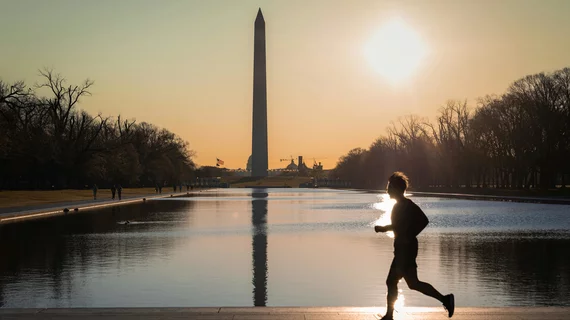
Will there or won’t there be a federal moratorium on state-level regulation of AI? That’s only one question healthcare stakeholders are asking of the powers that be in Washington, D.C., as 2025’s time begins running out. The President wants the ban, the Senate doesn’t, and the House of Representatives could go either way. It’s unlikely any decisive movement will take shape ahead of the holidays, but the debated premium subsidies for Obamacare enrollees (technically “premium tax credits”) are set to stop on New Year’s Day. All healthcare battles are of a piece, so the outcome of one fight is likely to affect the outcome of the other. And something has to give by Jan. 1. Brief background:
- President Trump doesn’t want states making laws to regulate AI. He’s only down with such rulemaking if it happens in Washington—and with his stamp on it. As is his wont, he’s taken to Truth Social to bullhorn his opinion. “Investment in AI is helping to make the U.S. Economy the ‘HOTTEST’ in the World, but overregulation by the States is threatening to undermine this Major Growth ‘Engine,’” he posted Nov. 18. “Some States are even trying to embed DEI ideology into AI models, producing ‘Woke AI’ (Remember Black George Washington?). We MUST have one Federal Standard instead of a patchwork of 50 State Regulatory Regimes. If we don’t, then China will easily catch us in the AI race.”
- The President pushed Congress to take up AI regulation by adding a provision in the National Defense Authorization Act or passing a standalone bill on the matter. The notion to revise the NDA Act seems to have started with GOP House leaders, who earlier indicated they were mulling such a move. When word got out on that, expressions of resistance popped up from Congressional members of both parties.
- This skirmish has been flaring up and fizzing out at a relatively quiet level for months now. It started over the summer when the House wrote a tax-and-spending bill that included a 10-year ban on state and local regulations. The Senate deleted that provision with a near-sweep vote, 99 to 1, and the President signed the ban-less bill into law on the Fourth of July.
- Ben Werschkul, Washington correspondent for Yahoo Finance, does a nice job summarizing the present state of the healthcare cage match in the nation’s capital. “The Senate will be the center of the healthcare conversation this week as bipartisan talks are underway,” he reports in an item posted Dec. 2. “This was the issue that Democrats voted to shut down the government over, but the stoppage ended with only a promise to have a Senate vote on the issue before the end of the year.” Meanwhile, Werschkul adds, the White House has “veered from promising its own plans—with one reported proposal even extending enhanced Obamacare subsidies for two more years—to taking a step back, with Trump’s involvement in the debate going forward unclear.”
- Maybe early 2026 will bring some clarity on both healthcare policy and AI regulation. One can only hope.
Imagine if Mad Men-generation ad agencies had been armed with AI. It’s a fun thought experiment. A media outlet covering healthcare advertising goes it one better, asking agency people how they use the technology for their clients right now. “We’ve embedded AI across the entire creative and production lifecycle, from insight development and concept testing to multichannel content production,” a chief creative officer tells the outlet, MedAdNews, which mainly concentrates on pharma. “[Numerous AI tools] have made our process more dynamic, efficient and collaborative, allowing us to deliver strategic, creative and production value simultaneously.”
- Asked about common misperceptions regarding AI in his line of work, an EVP focused on data and analytics says a lot of people think AI threatens creativity or turns everything into generic content. “In reality, AI makes mediocre work faster, but it makes great thinking unstoppable,” the thought leader states. “For pharma agencies, the real future is an AI-powered creative partner trained in scientific nuance and patient reality, paired with media engines that don’t just target demographics but anticipate moments of need. AI won’t make us less human. It’ll make the work impossible to ignore.”
- Nor are the ad men and women so consumed with helping clients sell stuff that they lose sight of healthcare’s healing mission. “Looking ahead, we’re especially excited about AI’s potential to accelerate personalized medicine and proactive care, shifting the paradigm from treatment to prevention,” says an ad agency network’s head of data and AI strategy. “We also see tremendous promise in AI-driven solutions that improve healthcare access, particularly in underserved regions where affordability and infrastructure are barriers. By harnessing AI to optimize resource allocation, tailor messaging and streamline patient journeys, we can help brands make a meaningful difference in people’s lives globally.”
Also worthwhile:
- 30 Under 30 Healthcare 2026: Using AI to improve care and cut administrative burdens (Forbes)
- From a dark carpark to the clinic: how gardening leave, pandemic and a son’s illness turned me into an AI advocate for Irish healthcare (Irish Medical Times)
From Health Exec’s sibling outlets:
- AI has already transformed TAVR care—and the best is yet to come (Cardiovascular Business)
- AI more accurate than breast density status for predicting cancer risk (Radiology Business)

Dave P. has worked in journalism, marketing and public relations for more than 30 years, frequently concentrating on hospitals, healthcare technology and Catholic communications. He has also specialized in fundraising communications, ghostwriting for CEOs of local, national and global charities, nonprofits and foundations.