HHS out with bold AI strategy to ‘unleash a new era of wellbeing for a healthier America’
The Department of Health and Human Services has unfurled a roadmap for aligning its approach to AI adoption in healthcare with the broad AI aspirations of President Trump.
The White House spelled out the latter four months ago in an AI action plan. That document bore a subtitle that signaled the President’s vision in no uncertain terms: “Winning the Race.”
HHS posted its spinoff plan Dec. 4. The 20-page document states the agency’s intention is to lead a “whole-of-department transformation” that will help HHS operations leverage AI to improve public health, healthcare delivery, biomedical research, human services and agency operations.
The plan breaks down the resulting to-do list under five overarching action items:
- Strengthen governance, risk management and public trust. HHS says it will work to meet these aims by delineating “clear roles, comprehensive inventories of AI use cases, transparent risk-management practices and respect for Americans’ rights to their health information.”
- Spur development of a OneHHS AI-integrated Commons. This effort will yield shared data resources—“where legally permissible,” the document notes—as well as computing power, models and testbed environments to divisions within the department, “enabling rapid and reusable AI innovation at lower cost.”
- Equip the HHS workforce with relevant AI skills and fit-for-purpose AI tools. The idea here is to reduce administrative burdens and “increase mission impact.”
- Accelerate research, translation and reproducibility. HHS states it will pursue this goal by “embedding the principles of Gold-Standard Science into AI development and deployment.”
- Support an outcomes-first approach to integrating AI. Here the agency states it wants to “modernize care and public health infrastructure to improve health at the individual and population levels.”
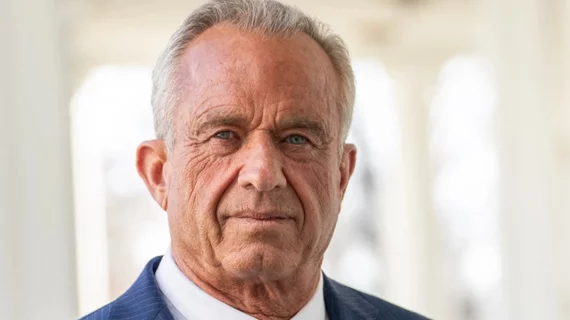
The Robert F. Kennedy Jr.-led agency is already putting its money where its mouth is: The new strategy document notes HHS expects a 70% increase this year over the 271 active or planned AI implementations it counted in fiscal 2024.
‘This is just the beginning’
In a message introducing the content, HHS Deputy Secretary Jim O’Neill cites the White House’s AI action plan of last summer.
“[T]he President called on agencies to ensure that ‘all employees whose work could benefit from access to frontier models have access to, and appropriate training for such tools,’” O’Neill writes. “Following the President’s direction, our Chief Information Officer and I made ChatGPT available to everyone in the Department.” O’Neill adds:
‘We led the federal government in this effort, but this is just the beginning.’
Clark Minor, HHS’s CIO and acting chief AI officer, says the agency is also “spurring American innovation with our partners in the private sector. HHS is driving reproducible research—supporting development of AI-enabled tools that accelerate breakthroughs in precision medicine, drug development and public health.” More:
‘This paradigm shift will unleash a new era of wellbeing for a healthier America.’
O’Neill enthuses that HHS will use AI to “supercharge” rigorous science and expand access to shared tools and data.
“By guiding innovation toward patient-focused outcomes, this administration has the potential to deliver historic wins for the public—wins that lead to longer, healthier lives.”
Questions linger and will likely get louder
Now that it’s in writing, HHS’s AI strategy is likely to come under scrutiny. Legitimate questions newly ripe for the asking might include:
- Will an aggressive stance to AI lead to cutting corners on protecting patients' personal health information?
- Will the Trump Administration’s frequently reiterated commitment to pulling ahead of China advantage aggressive AI entrepreneurialism over fastidious safety guardrailing?
- Will a “try-first” culture—trumpeted in both the White House AI Action Plan and the new HHS AI strategy document—encourage the 80,000-member HHS workforce to err on the side of experimentation?
On the last point, thus far there’s been a strategically sustained dead heat between caution and innovation, bought into by nearly all AI stakeholders. Can the running tie continue with an “all-in” approach to all things American AI?
No guts, no glory?
Only time will tell, suggests Darrell West, senior fellow in the Brooking Institution’s Center for Technology Innovation.
“There are a lot of unanswered questions about how sensitive medical information will be handled and the way data will be shared,” West tells the Associated Press. “There are clear safeguards in place for individual records, but not as many protections for aggregated information being analyzed by AI tools. I would like to understand how officials plan to balance the use of medical information to improve operations with privacy protections that safeguard people’s personal information.”
Then too, West sees the value in proceeding assertively albeit carefully.
The HHS AI strategy, he points out, could amount to a “transformative example of a modernized agency that performs at a much higher level than before.”
Read HHS’s AI strategy document here.

Dave P. has worked in journalism, marketing and public relations for more than 30 years, frequently concentrating on hospitals, healthcare technology and Catholic communications. He has also specialized in fundraising communications, ghostwriting for CEOs of local, national and global charities, nonprofits and foundations.