Magazine

Thumbnail

Smart technologies are often touted as the answer to some of cardiology’s greatest challenges in patient care and practice. But where does hyperbole end and reality begin with artificial intelligence, machine learning and deep learning?

Thumbnail

Developments in vastly scalable IT infrastructure will soon increase the rate at which machine learning systems gain the capacity to transform the field of medical imaging across clinical, operational and business domains. Moreover, if the pace seems to be picking up, that’s because data management on a massive scale has advanced exponentially over just the past several years. 

Thumbnail

A new project is seeking to make MRI scans up to 10 times faster by capturing less data. NYU’s Center for Advanced Imaging Innovation and Research (CAI2R) is working with the Facebook Artificial Intelligence Research group to “train artificial neural networks to recognize the underlying structure of the images to fill in views omitted from the accelerated scan.”

Thumbnail

Machine learning is one of the hottest topics in radiology and all of healthcare, but reading the latest and greatest ML research can be difficult, even for experienced medical professionals. A new analysis written by a team at Northern Ireland’s Belfast City Hospital and published in the American Journal of Roentgenology was written with that very problem in mind.

Thumbnail

A compilation of the latest news in AI and machine learning

Thumbnail

It’s all about the data. We’ve been saying this for years. We can choose to look at this in one of two ways. It’s either a constant truism or it actually evolves and gains mass over time. In the age of artificial intelligence, it is both. 

Thumbnail

Artificial and augmented intelligence are driving the future of medical imaging. Tectonic is the only way to describe the trend. And medical imaging is at the right place at the right time. Imaging stands to get better, stronger, faster and more efficient thanks to artificial intelligence, including machine learning, deep learning, convolutional neural networks and natural language processing. So why is medical imaging ripe for AI? Check out the opportunities and hear what experts have to say—and see what you should be doing now if you haven’t already started.

Thumbnail

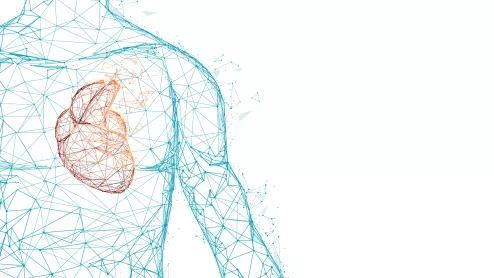
Not just for years but for decades, the department of radiology at the University of Wisconsin School of Medicine and Public Health in Madison has been leading the charge on creating innovative technology and translating imaging research into clinical practice.

Thumbnail

(Spoiler alert: It’s a 69-page report that indicates the use of AI in healthcare is both promising and doable.)

Thumbnail

AI is hotter than hot in healthcare, according to AI market watcher CB Insights. Healthcare-AI funding reached $2.14 billion across 323 deals from 2012 through the second quarter of 2017—and has consistently been the top industry for AI deals.

Thumbnail

To look into the future is to catch only a glimpse inside Simon Warfield’s radiology research lab at Boston Children’s Hospital. His team is pairing hyperfast imaging and deep learning to push the limits of medical imaging and artificial intelligence (AI) to identify, prevent and treat disease. He’s also eyeing ways AI will help as data sharing expands among research sites. “The research world needs to look forward to manage forward,” he says.

Thumbnail

The power of artificial intelligence (AI) is enabling clinical breakthroughs that identify biomarkers without invasive procedures, diagnose skin cancer with a photograph, predict adverse clinical events, and recommend treatments based on current literature. Getting these innovations to market requires access to large, complex data sets to train the AI models.