HE homepage

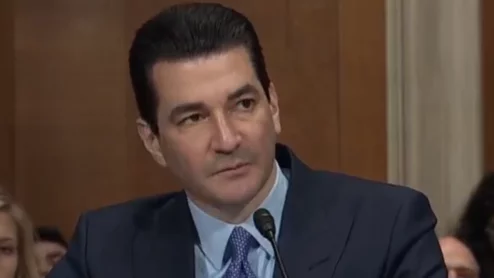
scott gottlieb md

Government regulation can’t keep up with innovation in healthcare technology, especially when dealing with mobile medical applications—and those in charge of developing regulatory framework know it, according to top officials at the FDA in a July 2 viewpoint in JAMA.

WeDoctor, a startup worth $5.5 billion, has some saying it will become China's “Amazon of healthcare." The company’s main focus is removing unnecessary red tape and wait times at government clinics.

The American Medical Association recognized three startups as winners in its AMA Healthcare Interoperability and Innovation Challenge. The contest awarded $50,000 in Google Cloud credits to three companies with proposals to best use patient-generated health data to improve care and reduce inefficiencies in workflows.

Cigna logo

Mark McClellan, MD, a former CMS administrator and a former Commissioner of the FDA, was appointed to Cigna’s board of directors, where he will begin his term Dec. 1.

Higher occupancy rates in hospitals don’t necessarily mean more infections. Rather, a facility can have the highest risk for Clostridium difficile infections when capacity was in a Goldilocks zone—not too full, not too empty—between 25 and 75 percent, according to new research from the University of Michigan and RAND Corporation.

Higher occupancy rates in hospitals don’t necessarily mean more infections. Rather, a facility can have the highest risk for Clostridium difficile infections when capacity was in a Goldilocks zone—not too full, not too empty—between 25 and 75 percent, according to new research from the University of Michigan and RAND Corporation.

Around the web

This is the second FDA clearance in two weeks for Massachusetts-based Anumana. The company's AI models are built to evaluate ECG results for signs of various cardiovascular conditions.